Agriculture stands as the backbone of Africa’s economy. Across the continent, the agricultural sector employs over 60% of the entire workforce and contributes a massive share of the continent’s Gross Domestic Product (GDP). Because of this, global investors, tech innovators, and local governments are constantly looking for ways to boost farming. For years, agtech startups have predominantly focused on building and funding farm management apps. These are mobile software applications designed to help farmers track their expenses, log records, schedule when to plant, and check weather forecasts.
While these digital agtech platforms are highly innovative, they frequently miss the most damaging problem in the African food supply chain. The real crisis in African agriculture is not just about how much food can be grown out of the soil; it is about how much of that food actually makes it to the consumer’s plate.
Investing in Post-Harvest Loss (PHL) technology, such as solar-powered cold storage units and Internet of Things (IoT) monitoring sensors, delivers a far higher social and financial return than just another farm management app.
The Staggering Scale Of The Food Waste Crisis In Africa
To understand why agriculture in Africa is struggling, consider the story of a typical smallholder farmer. They use a modern farm management app, buy high-quality seeds, and apply the exact right amount of fertiliser. Thanks to this technology, their crop yield increases by 20%.
However, once the crop is harvested, the farmer runs into a harsh reality. There are no refrigerated trucks available to transport the goods. The rural roads are full of potholes, causing long transport delays. When the produce finally arrives at the local market, the market is completely flooded with the same crops from other farmers. Because of the intense tropical heat and a lack of storage, half of their tomatoes, mangoes, or leafy vegetables rot within 48 hours.
This is what economists call the “leaky bucket” problem. According to the United Nations Food and Agriculture Organisation (FAO), roughly 30% to 50% of all food produced in Sub-Saharan Africa is lost or wasted before it ever reaches a consumer. For highly perishable fruits and vegetables, that loss can easily skyrocket to 60% in areas with poor infrastructure. Even for hardy grains like maize and sorghum, insects, moisture, and mould destroy 10% to 20% of the harvest during traditional storage.
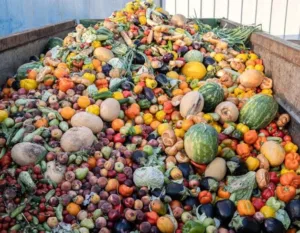
Image source: Green City Times
Farm management apps try to pour more water into the bucket by increasing production. Post-Harvest Loss technology, on the other hand, plugs the holes in the bucket by saving what is already there. From a business and investment perspective, plugging the holes with the help of agtech is far more efficient. It is cheaper, faster, and much more sustainable to save food that already exists than to clear more forests, use more scarce water, and buy more fertiliser to grow extra food that might just end up rotting anyway.
Immediate Financial Returns for Smallholder Farmers
When a particular crop is in season, the local market experiences a massive glut. Because thousands of smallholder farmers harvest at the same time and lack any means to preserve their yields, they are forced into a corner. They must sell their produce immediately for pennies, just to make a tiny amount of money before the food spoils entirely. Agtech can be of immense benefits in helping these farmers minimize losses.
The Financial Power of Solar-Powered Cold Storage
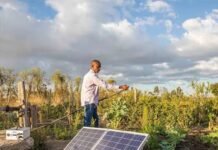
Solar-powered cold hubs completely rewrite the economic rules for smallholder farmers. Because these cooling structures run entirely on solar panels, they do not require connection to a national electricity grid, making them perfect for rural, off-grid communities.
With access to a community cold room, a farmer no longer has to accept exploitation on harvest day. Instead of selling a crate of tomatoes for next to nothing, they can store it safely for days or weeks. This allows them to bypass the market glut, wait until the oversupply drops and prices rise, and then sell their fresh produce for two or three times the harvest-day price. This technology gives smallholder farmers actual control over their pricing.
The Financial Opportunities In IoT Monitoring
Internet of Things (IoT) technology involves placing small, affordable, internet-connected sensors inside storage facilities, grain silos, or transport trucks. These smart sensors constantly track temperature, humidity, and gas levels, such as ethylene, which causes fruit to ripen and spoil.
If a community cooling unit stops working properly, or if a transport truck gets stuck in traffic at a border entry point, the temperature inside begins to rise. Instead of discovering the damage days later when the food is already ruined, the IoT system instantly sends an automated text alert to the operator’s mobile phone. This allows for immediate action to fix the ventilation or redirect the truck before the entire cargo spoils.
A farm management app can help a farmer plan their calendar, but it cannot stop a crate of mangoes from baking and rotting in 35°C heat. PHL technologies directly protect the farmer’s wallet by preserving the physical quality and market value of their crop.
Read Also: How Startups Can Thrive Doing Vertical Farming In Nigeria
Solving the Infrastructural Challenges
A major flaw with many farm management apps is that they are built on assumptions that do not match the daily, practical reality of rural African life. For a farm management app to work successfully, it generally requires three things: continuous ownership of a smartphone, reliable and high-speed internet data, and a high level of digital and technical literacy.
In many farming communities across countries like Nigeria, Kenya, Ethiopia, and Ghana, network connectivity is highly unstable, and mobile data costs are painfully expensive. Furthermore, expecting an elderly smallholder farmer or a busy cooperative member to navigate complex software dashboards daily is a steep hill to climb. This is why the actual adoption rates of advanced farm management apps remain incredibly low across the continent.
In stark contrast, PHL technology works beautifully as a physical infrastructure service. A farmer does not need to own an expensive smartphone, buy data bundles, or understand computer coding to benefit from a solar cold room.
Through innovative “pay-as-you-store” business models, a farmer simply walks up to a community cold hub located at a local marketplace, pays a very small daily fee per crate, and walks away. The complex technology and maintenance are handled entirely by the company running the hub. This makes the technology instantly accessible to every single farmer in the community, regardless of their level of formal education or digital literacy.
Massive Environmental and Climate Benefits
Agriculture is deeply affected by changing weather patterns, but the sector is also a major contributor to climate change. When millions of tons of food rot in open dumpsters, village markets, and landfills, the decaying matter produces methane gas. Methane is a greenhouse gas that is significantly more damaging to the global atmosphere than carbon dioxide.
Beyond the gas emissions, post-harvest loss represents a heartbreaking waste of natural resources. Think of the millions of litres of water used to irrigate fields, the natural nutrients pulled from the soil, and the intense human labour expended by families under the hot sun. When a crop rots, all of those resources are completely wasted for zero return.
By investing in solar-powered cold storage and smart monitoring, stakeholders are backing a genuinely green solution. These systems replace the need for dirty, noisy diesel generators that many cold chains traditionally rely on. By keeping food fresh and moving it efficiently to buyers, we extract the maximum nutritional and financial value out of every single drop of water and bag of fertiliser used during the planting phase.
Overcoming the Implementation Hurdles
While the benefits of post-harvest technologies are clear, scaling them across Africa does come with challenges. The initial cost of buying solar panels, cooling equipment, and high-tech sensors can be too high for an individual smallholder farmer. Furthermore, technical maintenance requires specialised skills that may not be readily available in remote villages.
To overcome these hurdles, the industry is shifting toward collective and service-based models. Agricultural cooperatives are pooling resources to purchase shared facilities, allowing hundreds of families to split the costs.
Private tech companies are stepping in to build, own, and maintain the equipment, charging farmers only for what they use. When combined with training from agricultural extension officers and investments in rural roads, these technologies thrive. Success stories from organisations like SokoFresh in Kenya have proven that when community ownership is prioritised, post-harvest losses can drop from 40% to under 2%, while increasing average farmer incomes by 20%.
Read Also: How Agrovesto is Digitizing Nigeria’s Smallholder Farmers in Nigeria
Why Investment Focus Must Shift To Ensure Food Security
For Africa to achieve true food security, eliminate rural poverty, and build a resilient agricultural economy, the investment focus must shift. The continent does not have a problem growing food; it has a systemic problem preserving food after it is harvested.
Farm management apps certainly have a role to play in the future of digitised agriculture, especially as smartphone ownership grows among the younger generation. However, at this current stage of Africa’s development, high-tech software apps are a luxury built on top of a weak physical foundation.
Post-harvest technologies like solar cold storage and IoT monitoring provide the sturdy foundation that is desperately needed. They offer immediate financial relief to farmers, function perfectly within off-grid rural infrastructures, protect the environment from harmful emissions, and give investors a highly scalable, predictable, and high-impact business model.
For impact investors, development partners, and African governments looking to make a permanent, positive change in the continent’s food ecosystem, it is time to start investing heavily in the agtech that ends post-harvest losses.