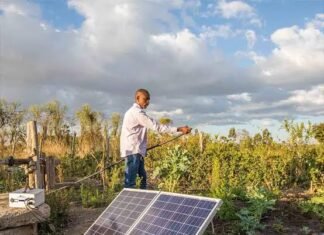
A Nigerian clean technology company, Eja-Ice (often referred to locally as Ije-Ice), has secured a $1 million investment to expand its solar-powered refrigeration and cold-chain business. The funding comes from All On, an independent impact investing firm backed by Shell, which focuses on bringing renewable energy to areas in Nigeria with little or no access to the national electricity grid.
This new financial boost is a major milestone for the startup, which was founded in 2020 by Yusuf Bilesanmi. Eja-Ice designs, assembles, and sells solar-powered cooling equipment. The company’s main goal is to help small businesses, market traders, and farmers keep their food and goods fresh without relying on expensive and polluting petrol or diesel generators.
Tackling Food Spoilage Resulting from Poor Electricity
In many rural and coastal communities across Nigeria, keeping food fresh is a massive struggle. Due to weak electricity grids or a total lack of power, small-scale farmers and fishers cannot store their products safely.
When fish, meat, fruits, and vegetables rot before they can be sold, it leads to heavy financial losses. Across Sub-Saharan Africa, these post-harvest losses cost over $4 billion every year. For a local trader, a single day without electricity can mean throwing away an entire week’s worth of inventory and profit.
To survive, many business owners rely on small fossil-fuel generators. However, with the rising cost of fuel in Nigeria, running these generators has become too expensive for ordinary traders, not to mention the thick smoke and noise pollution they create.
How Eja-Ice Solves the Problem
Eja-Ice provides an affordable, clean alternative by building cooling systems powered entirely by the sun. Because the systems use solar panels and batteries, they do not need fuel or a connection to the national grid to keep working through the day and night.
The startup does not just make standard freezers; it provides a variety of mobile and stationary cooling options tailored for different types of businesses including:
- Solar Freezers and Cold Rooms: These are stationary storage systems for market cooperatives, shops, and clinics to store large amounts of food, dairy, or medical supplies.
- Solar Powered Tricycles and Vans: Known as the Eja-Ice Poise, these are locally assembled three-wheel delivery vehicles fitted with solar cooling boxes. They allow businesses to move chilled items like ice cream, fresh yoghurt, and meat across long distances without the products melting.
- Portable Freeze Boxes: These are simple battery-powered cooling boxes that can easily be placed on standard trucks, buses, or open carts for local transport.
To make these high-tech systems accessible to low-income traders, Eja-Ice operates multiple business models. Instead of forcing small traders to pay the full price upfront, they offer lease-to-own plans and service-based access (where users pay a regular fee to use the cooling space). They also offer direct sales for larger corporate clients like FanMilk and Chicken Republic, who use the solar tricycles for last-mile food distribution.
Where the $1 Million Funding Will Go
The $1 million investment from All On will be used to move Eja-Ice into its next big phase of growth. The funds will go directly into operations like:
- Scaling Up Local Manufacturing: Improving and expanding the company’s assembly facilities in Lagos so they can produce more solar freezers and cooling vehicles faster.
- Expanding Reach into Underserved Markets: Bringing these solar cold-chain systems deeper into off-grid coastal and rural communities where small-scale fishing and farming are the primary sources of livelihood.
- Job Creation and Operational Growth: Hiring more local technical talent, engineers, and operational staff to handle maintenance, distribution, and customer support.
Driving Dignity and Economic Growth
Speaking on the impact of the investment, Yusuf Bilesanmi, the Founder and CEO of Eja-Ice, emphasised that local production and human dignity are at the heart of the company’s vision.
“This capital raise is a huge step forward in our vision to power homes and businesses with products designed, assembled, and optimised right here on the continent,” Bilesanmi stated. “It’s not just about access to electricity—it’s about dignity, productivity, and opportunity for the over 600 million people across sub-Saharan Africa who are still off-grid.”
Caroline Eboumbou, the Chief Executive Officer of All On, also shared her excitement about the partnership, highlighting how cold storage strengthens local markets.
“All On’s investment in Eja-Ice reflects our approach of supporting solutions that improve energy access while enhancing livelihoods, reducing costs, and enabling businesses to grow,” Eboumbou said. “Strengthening cold-chain infrastructure is an important step towards building more resilient local economies and expanding opportunities in underserved markets.”
Read Also: AI Infrastructure Startup, AethexAI Secures $3 Million in Pre-Seed Funding
Projections For 2028
With this fresh funding, Eja-Ice has set ambitious targets for the near future. By the year 2028, the company projects that its solar cooling solutions will support more than 1,500 micro, small, and medium enterprises (MSMEs) across both West and East Africa.
Environmentally and economically, the company aims to preserve between 4,000 and 7,000 tonnes of food annually, significantly boosting food security. Furthermore, by replacing thousands of petrol generators with clean solar alternatives, Eja-Ice expects to prevent between 30,000 and 50,000 tonnes of harmful carbon dioxide (CO2) emissions from entering the atmosphere.
This investment stands as a clear example of how African-led innovation, backed by local impact capital, can solve daily economic problems while building a greener future for the continent.