
Nigeria faces serious security challenges including terrorism, banditry, oil theft, cybercrime, etc. For this reason, a handful of quiet, ambitious defense-tech startups are stepping up to build tools that support national and private security efforts.
In this article, we look at the defence technology space in Nigeria and around the world. We also discuss three Nigerian defence tech startups daring to build in a space few are watching – and what they have achieved so far.
Why Defence-Tech Is Growing in Nigeria and Globally
When most people think of tech startups in Nigeria, they focus on fintech, e-commerce, or logistics. Defence technology is not something you often hear about. It is not mainstream. It is not even on the radar of most tech enthusiasts or aspiring founders.
However, the reality is that defence-focused startups are attracting record investments as global threats increase. This boom creates opportunities for both founders and investors. Investors who long avoided military-related startups are now putting money into them.
Security Incentives Driving Surge in Defense-Tech Funding
The reason for the surge in global defense tech funding is certainly due to rising global tensions. Geopolitical instability has changed how tech investors think. Russia’s 2022 invasion of Ukraine was a turning point. Many in Silicon Valley watched low-cost drones and AI-driven systems change the nature of battle. Conflicts from Eastern Europe to the Middle East, plus immense power tensions between the US and China have shown the need for modern defence technology.
Globally, government defence budgets are rising sharply. In 2025, the United States spent $919 brillion on defence. With the ongoing Iran war, the US defense spending is expected far exceed $1 trillion. Governments want new ideas. There is real money available for anyone who can deliver better defence solutions more quickly and cheaply.
Where the Money is Going
The defence industry was once controlled by a handful of giant contractors. Startups could not break in. Venture investors saw the sector as too slow and therefore governments now want new vendors who can move fast. NATO member states have even launched a €1 billion fund to support defence and security startups. By late 2025, nearly 8% of all venture capital funding worldwide went into defence tech.
Growing Faster Than Other Sectors
Defense-tech’s growth is striking compared to other industries. In Europe, it has become the fastest-growing category in venture capital. It now makes up about 4% of all VC funding in Europe – and over 6% in the European Union. At the same time, areas like fintech and consumer internet have stalled.
This surge is not only driven by small startups. Large industry players are also raising huge amounts. Anduril’s $1.5 billion round in 2024 and Helsing’s €600 million round in 2025 show that significant money, talent, and top investment firms are now fully engaged in defence tech.
Also, Read: The Startup Studio: A New Model That’ll Create Successful Startups in Africa
Defence-Tech in Nigeria: Three Startups to Know
1. Terra Industries (also known as TerraHaptix)
Launched in 2023 by Maxwell Maduka, a former Nigerian Navy drone engineer, and Nathan Nwachuku, Terra Industries is the most prominent defence tech startup in Nigeria. The company is based in Abuja.
Terra develops autonomous multi-domain security systems to monitor and protect critical infrastructure. Its systems operate across air and land, with plans to expand into maritime. The company targets threats including terrorism, sabotage, and armed attacks on strategic assets.
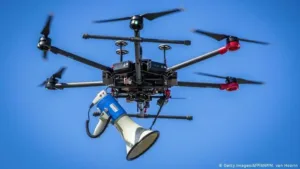
Image source: McKinsey of European Defense Tech Sector
Terra operates from a 15,000-square-foot facility in Abuja. Recently, the company secured a $22 million funding round to develop its security systems. This came after an earlier $11.75 million round led by US venture capital firm 8VC, with support from Valour Equity Partners, Lux Capital, SV Angel, and others. In total, Terra has raised $34 million within months of launching.
The company has begun expanding into other African markets and plans to announce new country operations later this year. It has also signed a partnership with AIC Steel to build a joint manufacturing facility in Saudi Arabia. Terra says its focus is on countries where infrastructure security and terrorism are national priorities.
2. Kifta Technologies
Founded in 2018 by Monsuru Anifowoshe, Kifta Technologies started from a personal problem. Frequent security issues disrupted supply chains in his textile business. This led him to develop drones to monitor goods in transit.
Kifta has since expanded to offer smart glasses with facial and license plate recognition, plus drone systems for firefighting, naval operations, and border security. Their drone prototype reportedly cost $450,000 and took three years to develop.
Despite these innovations, Kifta faces challenges in Nigeria. These include limited access to government decision-makers and unreliable power supply. As a result, the company mainly serves clients outside Nigeria. It plans to build a manufacturing facility in Nigeria so its products can be certified as Nigerian-made.
3. Proforce Defence Limited
Proforce may not fit the definition of a startup – it was founded in 2008, making it older than the 10-year limit in Nigeria’s Startup Act. But it is impossible to discuss defence innovation in Nigeria without mentioning the company.
Proforce is Nigeria’s first defence manufacturing company. It is best known for making armoured vehicles, including bulletproof personnel carriers, tactical vehicles, combat helmets, and ballistic vests. The company does not just assemble kits. It designs, engineers, and produces in Nigeria for both local and international markets.
Proforce has supplied vehicles to the Nigerian Army, Nigerian Navy, and governments across West Africa. Private security firms and oil companies operating in volatile regions also use their vehicles for convoy protection.
Proforce is proof of what is possible when defence tech is taken seriously in Nigeria – backed by technical skill, government contracts, and a long-term view of manufacturing.
Assessing Terra Industries’ Stellar Performance in Nigeria’s Emerging Defense-Tech Landscape
Terra’s rapid fundraising shows growing investor interest in defence and security technology across emerging markets. As African economies grow, critical infrastructure such as energy facilities, ports, and transport networks face greater security risks. Governments are increasingly looking for locally developed surveillance and response systems designed for regional conditions.
Support from US venture firms suggests cross-border interest in security technologies beyond traditional markets. Terra’s expansion into Saudi Arabia shows ambition to scale manufacturing and access larger defence supply chains. The company’s growth points to a shift towards technology-driven security solutions in Africa, where protecting infrastructure is linked to economic stability and foreign investment.
Unlocking Opportunities for Investors, Founders and Former Military Officials
Defense-tech is going mainstream and founders and investors have to take advantage of this. Major investors have launched dedicated funds for national security sectors. Specialist defence VC funds are appearing in both the US and Europe.
Also, in defense -tech, success requires expertise because selling to militaries and governments involves long sales cycles, complex rules, and unique procurement processes. This can be a challenge – or a competitive advantage. Investors and founders who develop deep knowledge of this space can gain an edge.
Finally, former military officials are also finding roles in defence tech as they are increasingly moving into venture capital to help guide startups through the bureaucracy. Defense startups that absorb former military officials to offer them insider knowledge and connections will be better placed to succeed.