Every year, hundreds of thousands of African traders make the same treacherous journey across apps. This especially affects those who source from Chinese marketplaces. These individuals experience challenges in arranging payments and getting the shipping agent. The challenges continue when you have to pray that the quality matches the sample. And somewhere in that fragmented maze of platforms with language barriers and trust gaps, money gets lost, goods arrive wrong, and businesses quietly collapse.
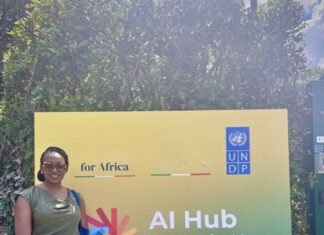
As revealed during the Founder Stories discussion recently, Omolara Sanni, Co-founder and COO of Midddleman, has lived that story personally. And she has spent the last few years building the platform she wishes had existed when she did.
From E-Commerce Pain to Infrastructure Play
Midddleman did not start as an infrastructure company; rather, it started as a frustration. In 2018 and 2019, Omolara and her co-founder were running their own e-commerce businesses and running headfirst into one of Nigeria’s most persistent commercial problems, showing the trust gap between buyers and sellers. Payment on delivery was the norm, but it gutted cash flow for merchants; hence, they decided to solve it.
In 2023, they built an escrow platform. The idea was to hold funds in trust and release them on delivery to protect both parties. However, the market was not ready because of low trust in digital payment infrastructure, and ironically, given what they were trying to fix, it prevented adoption. The escrow play stalled. In reaction to this, they pivoted.
In 2024, they turned their attention to a different and larger trust problem, and that was payments for China imports. Nigerian traders importing from Chinese suppliers had no reliable, structured way to make cross-border payments to manufacturers they had never met, in a country whose systems they could not navigate, so Midddleman stepped into that gap.
Then, in 2025, after listening to feedback from large traders, they expanded again, and this time into full infrastructure, beyond just payments and sourcing only.
One Platform with the Entire Value Chain.
Midddleman describes itself today as a consolidated trade infrastructure provider for Africa-China commerce, serving as a literal description of what the platform does.
A trader signs up on Midddleman and immediately gains access to 1688, which is the massive Chinese B2B marketplace that most African businesses either cannot navigate or have never heard of. They browse, find what they need, place an order, and specify their requirements. From there, Midddleman takes over.
A procurement agent, stationed in China, prepares a quote and coordinates directly with the manufacturer. Midddleman makes the payment directly to the supplier. The goods move to a logistics warehouse in China, where additional quality checks can be requested before anything ships. Once cleared, the cargo is transported to Nigeria and delivered to the buyer. The significance of that simplicity cannot be overstated. Before Midddleman, every one of those steps required a different service provider, a different relationship, and a different set of risks.
The Secret Weapon: On-Ground Agents
The piece of the Midddleman model that most platforms miss, and the piece that makes the whole system work, is the procurement agent network. There are over 100,000 sourcing agents in Guangzhou alone. Many of them are Nigerians and other Africans who have built lives and businesses in China, developing deep relationships with manufacturers and a fluency in both the culture and the commercial systems. Midddleman has digitized and integrated this ecosystem.
These agents are not middlemen in the pejorative sense; they are quality gatekeepers. When a bulk order is placed, the agent physically confirms that every unit in the shipment matches the sample the buyer approved. This matters enormously because if a quality issue is discovered only after goods arrive in Nigeria, the business incurs a total loss. There is no recourse, so the agent catches the problem before it becomes a catastrophe.
To ensure the agents themselves are trustworthy, Midddleman runs identity verification on all of them, collecting both local Nigerian and Chinese immigration documentation. Critically, agents never touch the money; all payments flow directly from Midddleman to the manufacturer. The system is designed so that the trust is structural, not personal.
Breaking the Language Wall
There is another barrier African traders rarely talk about openly, which is the language issue. Most Chinese B2B marketplaces, including 1688, operate entirely in Mandarin. For the average Nigerian importer, this is more of a wall than an inconvenience.
Practically speaking, Midddleman tears it down in two ways. First, the platform includes an AI translation tool built directly into the app that converts the entire 1688 marketplace interface into English. Users can read product descriptions, review seller ratings, and use the AI to ask detailed questions about products, including their quality, shipping timelines, reviews, and specifications – all in English.
Second, the on-ground agents communicate directly with manufacturers in Mandarin. When a buyer needs something specific, needs to negotiate, or needs to escalate a concern, the agent handles it natively. The language gap disappears at both the digital and the human layer.
The Infrastructure Gap Is the Gap
When asked what problem Midddleman is uniquely positioned to solve, Omolara maintained that it was the infrastructure gap.
Cross-border trade between Africa and China is not small. It is one of the most significant commercial corridors in the world. Yet the tools available to the African trader who wants to participate in it remain fragmented, opaque, and unreliable. Sourcing live on one app, while payments live on another. Essentially, logistics require a separate agent, and quality checks depend on personal relationships. Language is a constant friction point.
Midddleman is bringing all of that into one place as a purpose-built trade operating system for the Africa-China corridor.
Traction, Funding, and the Road Ahead
Midddleman has raised $46,000 between 2023 and 2025 through a family and friends round and is currently raising a $250,000 pre-seed to accelerate growth.
The next five years are focused on two core priorities. The first is logistics aggregation, bringing multiple shipping companies onto the platform so businesses can compare options, choose based on cost or speed, and avoid being locked into a single carrier. The second is geographic expansion. Ghana, Kenya, Egypt, and South Africa are all on the radar, driven by both inbound interest and the sheer scale of trade those markets already conduct with China.
On the operational side, Omolara is clear-eyed about where the scaling challenges will emerge, and that is in procurement. As volume grows, so does the complexity of tracking shipments, managing agent workloads, and resolving the inevitable edge cases of a lost package, a misdelivered consignment, or a supplier dispute. To manage this, Midddleman plans to establish a physical operational base in China, putting boots on the ground where the trade originates.
Why It Matters
Africa’s trade relationship with China is worth hundreds of billions of dollars annually. However, most of the value and most of the infrastructure sit on the Chinese side. African traders participate mostly as buyers, navigating systems not built for them, in a language not their own, through trust networks they have had to construct from scratch.
Midddleman is building on the African side of that equation. A platform that speaks the trader’s language, handles the complexity they cannot, and creates the structural trust that has historically been missing from the corridor.
The escrow idea did not work. The pivot into payments found traction. The expansion into infrastructure is the real bet. And if Omolara Sanni is right about the size of the gap she is filling, Midddleman is beyond a logistics startup; it rather is plumbing, the kind of infrastructure that, once it exists, becomes impossible to imagine trade without.