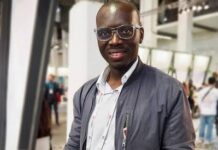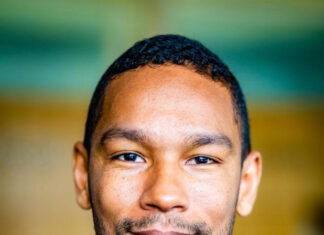
A young Kenyan innovator, Elly Savatia, has built an app that translates spoken and written language into sign language. According to his story, back in 2019 while teaching in northeastern Kenya, Savatia saw something that stayed with him. Three hundred deaf students shared a single human interpreter. The interpreter could not keep up. The problem resulted in slowed lessons, missed information, and became the seed of Terp 360.
Savatia, then in his early twenties, founded Signvrse and set out to create what he calls a Google Translate for sign language. The goal was clear. Take spoken words or written text and turn them, in real time, into clear sign language performed by a lifelike digital figure on a screen. No interpreter needed to be present. No expensive booking required. Just speech in, signs out.
Read Also: Pewbeam, Built by Israel Sobaloju Instantly Displays Bible Verses During Live Preaching
Building Something That Feels Local
Most sign-language translation tools have been built far from Africa, using foreign signs and foreign faces. Elly Savatia refused that path. He worked directly with deaf and hard-of-hearing Kenyans. Together they recorded more than two thousand three hundred signs using motion sensors that capture the full movement of hands, arms and body in three dimensions. The team set up a motion-capture studio in Nairobi that can record large numbers of new signs every day.
The result is an avatar that does not look stiff or mechanical. It moves with the natural flow of Kenyan Sign Language. Early versions of the app started small, handling only the alphabet and a few words. Feedback from the deaf community showed that the movements felt too robotic. Savatia and his team kept refining until the signing looked and felt right. The app now handles English and Swahili, converting both into Kenyan Sign Language. Plans are already in place to add Rwandan, Ugandan, South African, British and American sign languages in the coming years.
How the App Works
A user speaks or types. The system processes the words and a photorealistic three-dimensional avatar appears on screen, signing the meaning clearly and at a natural pace. The tool can be used in a classroom so a teacher’s lesson reaches every student. It can sit in a hospital so a doctor and patient understand each other. It can run in an office so a deaf employee joins meetings without waiting for an interpreter who may cost more than the company can afford.
Elly Savatia has described the need in plain terms. Many companies and public offices cannot hire full-time interpreters. As a result, deaf people remain shut out of education, healthcare and jobs. Terp 360 is designed as an enabler. It does not replace human interpreters where they are available. It multiplies access where they are not.
Accolades and Recognition Across Continent
In October 2025, Elly Savatia, at Dakar, Senegal, received the Africa Prize for Engineering Innovation from the United Kingdom’s Royal Academy of Engineering. The prize included fifty thousand pounds to help scale the work. Judges praised the blend of technical skill and genuine care for the problem. The award confirmed what many in the Kenyan tech community already knew: solutions built in Africa, for African realities, can stand with the best in the world.
The app has already moved beyond early trials. It has been tested in schools, hospitals and workplaces.