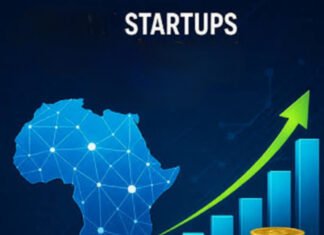
For a better part of a decade, the story of African tech was, almost without exception, a story about money. There has been mobile money in East Africa and digital payments in West Africa. There are cross-border remittances and lending apps, and insurance nudged into a USSD menu. It is important to note that the continent’s startup ecosystem earned its global reputation on the back of a single, galvanizing insight, which has turned out to be hundreds of millions of people who were unbanked, but almost everyone had a phone. In essence, fintech was the answer, but what becomes Africa’s next startup wave?
This chapter is not yet over; it is, however, maturing, as the rails have been laid. Flutterwave and Paystack wired up digital commerce across Nigeria, while M-Pesa turned Kenya into a living laboratory for mobile money. A smallholder farmer in rural Uganda can receive payment for his harvest, save his portion, and send the rest to a family member in Nigeria today from his mobile phone.
Read Also: Fintech Companies List Features Top African Startups
Notwithstanding how money moves this way in the continent’s fintech industry, what else is Africa’s next startup wave? The response to the poser, emerging from founders, operators, and the smarter corners of the venture community, does not represent another wave of consumer apps.
It is something harder, slower, and far more consequential. These are asset-light, climate-resilient B2B operating systems that digitize the continent’s physical infrastructure. In other words, Africa’s next startup wave will control the real economy and also become its nervous system.
The Foundation: Fintech as Infrastructure, Not Destination
Understanding why this shift is happening requires appreciating what fintech actually built. Beyond the balance sheets of individual companies, the payments revolution created something more durable, and this is trust. Informal merchants who once handled every transaction in cash now reconcile daily sales on a smartphone. Market women in Lagos accept QR code payments. Matatu operators in Nairobi settle fares digitally.
That behavioural shift is the hidden asset, and by extension, that means that any new platform from Africa’s next startup wave targeting these same merchants and consumers does not need to spend years convincing people that digital transactions are safe. The education has already happened. Fintech was the on-ramp; everything that follows inherits its credibility.
The technical infrastructure matters too. APIs from Paystack, Flutterwave, and a dozen regional players allow new startups to embed financial services, such as credit, insurance, and savings, directly into non-financial products. A logistics platform can offer a driver a micro-loan against next week’s bookings. A farming app can bundle crop insurance into a seed purchase. Finance has stopped being the product and has become a feature. That embedded model is the bridge into the next wave.
Africa’s Next Startup Wave: B2B Trade and Supply Chain Digitization
There exist certain challenges to cover in Africa’s next startup wave. This is particularly relevant to the tune that when you walk into any informal market from Accra to Addis Ababa, you will encounter the same scene where thousands of small retailers, ranging from kiosks and roadside stalls to spaza shops, are negotiating independently with a chaotic chain of middlemen to stock their shelves. Inventory runs out unpredictably. Prices fluctuate wildly. Credit is expensive and scarce. Working capital gets trapped.
This is not a niche problem. Informal retail accounts for an estimated 80–90% of consumer goods transactions in sub-Saharan Africa. It is, by volume, one of the largest and least efficient distribution systems on Earth.
Read Also: How Technology is Reshaping Nigeria’s Beauty and Wellness Ecosystem
B2B e-commerce platforms are going after it directly. Companies like OmniRetail in Nigeria and MaxAB across Egypt and Morocco are aggregating demand from thousands of small retailers, connecting them directly to manufacturers and distributors, and using that scale to negotiate better prices and terms. The model is deceptively simple via the use of technology to replace the middle layers, then monetise the data and financial services that flow through the platform.
The embedded trade credit angle is particularly powerful because these platforms see a retailer’s full purchasing history as what they buy, how often, and how reliably they pay, so they can underwrite working capital loans that a traditional bank could never offer. The platform knows more about a kiosk owner’s creditworthiness than any credit bureau. That information advantage is a sustainable moat.
The enormous inefficiency, the market is enormous, and the digital payment layer now makes it possible to actually collect. These are not moonshots but are large, patient, structural businesses.
Africa’s Next Startup Wave: Climate Tech and Renewable Infrastructure
Africa faces a paradox that is also an opportunity. The continent contributes the least to historical carbon emissions but bears a disproportionate share of climate change’s costs, and these are erratic rainfall, prolonged droughts, and coastal flooding. At the same time, roughly 600 million Africans still lack reliable electricity access. The two crises point to the same solution, which is decentralized, renewable energy infrastructure.
The Pay-As-You-Go (PAYG) solar model, pioneered by companies like M-KOPA, proved that rural households will pay for clean energy if the financing is structured correctly. Spread the cost of a solar home system over two years of daily micro-payments, and suddenly it is cheaper than the kerosene it replaces. M-KOPA has since extended the same asset-financing logic to smartphones, televisions, and clean cooking stoves—essentially becoming a consumer finance company with an energy entry point.
Read Also: SaaS Tools for African Startups: 7 Powerful Platforms Quietly Transforming the Ecosystem
The next frontier is productive use: solar water pumps for irrigation, refrigeration for small food businesses, and cold chain infrastructure for vaccines. These are assets that pay for themselves through economic output rather than just household convenience. SunFi in Nigeria is building the financing infrastructure to make this possible at scale.
Meanwhile, electric mobility, such as the Yango motors, is quietly becoming one of the most exciting spaces on the continent. The two- and three-wheeler market—boda bodas in East Africa, okadas in West Africa, and tuk-tuks everywhere—is massive, mostly petrol-powered, and ripe for electrification. Companies like Spiro and Ampersand are deploying EV fleets and battery-swap networks, reducing both fuel costs for riders and emissions for cities. Unlike the EV transition in the West, which requires displacing established car ownership culture, this is replacing motorbikes that are already at end-of-life. The switching cost is low; the economics are increasingly compelling.
What makes climate tech especially attractive right now is the capital alignment. Global climate funds, from development finance institutions to carbon credit markets, are actively hunting for high-impact, high-integrity investment opportunities in the Global South. African clean energy and mobility startups are precisely what those mandates are looking for. Patient, blended capital meets genuine market need.
Africa’s Next Startup Wave: AI-Driven Enterprise and Productivity Software
The global AI boom tends to get discussed in African tech circles with a mixture of excitement and anxiety. The excitement is warranted because the anxiety is that the continent will be left behind in powering Africa’s next startup wave, but this may be overstated.
The reason is that problems AI is best at solving are disproportionately acute in Africa. Alternative credit scoring, where AI uses mobile data, transaction history, and even satellite imagery to underwrite borrowers that formal institutions can not reach, is already generating real revenue. Predictive agritech, where models trained on local weather patterns and soil data advise smallholder farmers on when to plant and what inputs to buy, is being deployed at a meaningful scale. AI is not arriving as a consumer novelty here — it is arriving as an operational necessity.
The talent ecosystem is also quietly maturing. Platforms like Zindi, a data science competition community with a pan-African focus, are building a new generation of machine learning practitioners who understand local data, local languages, and local problems. That contextual knowledge is not replicable by a model trained in San Francisco on English-language internet data. It is a genuine competitive advantage.
The business model case is strong, too. AI-driven software is high-margin compared to logistics or hardware. A credit-scoring API sold to banks and fintechs across five countries can scale without proportionally scaling headcount or capital. For a continent where unit economics have historically been punishing, that matters.
The Real Obstacles
The macro environment has become genuinely more difficult for Africa’s next startup wave. Currency devaluations across Nigeria, Egypt, Ethiopia, and Kenya have compressed the dollar-denominated returns that international VCs need. Global risk appetite has shifted, with fewer mega-rounds and more pressure on startups to reach profitability faster than the previous cycle demanded.
Infrastructure gaps persist, too, as data costs remain high relative to income in many markets, limiting the smartphone-dependent models that work smoothly in more connected economies. Additionally, cross-border logistics is still expensive and unreliable, as a fragmented regulatory environment means that a B2B platform operating in five countries is essentially running five different businesses. Another challenge that awaits the evolution of Africa’s next startup wave is the remote-first Western companies’ options and retaining them by competition on more than salary.
These are not arguments against investing in the next wave, but arguments for choosing business models that are adapted to these constraints.
Africa’s Next Startup Wave: Funding the Plumbing
The story of African tech was about proving that digital products could work on the continent at all. The fintech decade was a resounding proof that it could work. Africa’s next startup wave is about building the operational infrastructure that the real economy, which is the informal merchants, the smallholder farmers, the urban commuters, and the micro-manufacturers, actually runs on.