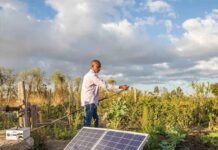
Agriculture employs more than half of Africa’s workforce, yet millions of smallholder farmers still struggle to turn hard labour into steady wealth. In Nigeria, the continent’s most populous nation, farming has long been held back by four stubborn roadblocks: a lack of affordable loans, middlemen who swallow up farm profits, guesswork around soil and weather, and broken supply chains that let fresh food rot before it reaches the market.
Today, a transformation is underway across Nigeria as homegrown technology startups, working alongside targeted government initiatives, rebuild the agricultural value chain from the ground up. Rather than asking rural growers to become tech experts overnight, these innovators are meeting farmers where they are—using simple mobile phones, village agents, solar energy, and smart data to solve everyday problems on the farm.
Unlocking Capital Without Traditional Collateral
Typically, approaching a commercial bank as a smallholder farmer in Nigeria meant facing an impossible demand in the form of land titles or urban property as collateral. Without formal credit, farmers could not afford quality seeds or fertiliser, trapping them in cycles of low yields. Private agritech companies are dismantling this barrier by replacing paper collateral with digital trust and farm-level data.
Startups like Crop2Cash are bringing formal banking directly to rural communities through simple tools that work even without smartphones or internet access. By giving farmers digital financial identities and recording their input purchases and harvest sales, Crop2Cash builds a verified financial history that unlocks working capital. Similarly, ThriveAgric uses its proprietary Agricultural Operating System to profile farmers, map their exact field sizes, and provide them with quality inputs on credit alongside crop insurance, allowing growers to repay after harvest.
Meanwhile, TradeBuza provides the digital backbone that lets agribusinesses and financial institutions manage outgrower schemes safely, automating payments and tracking every naira disbursed to rural suppliers. Zowasel takes this data-driven approach even further through its Alternative Credit Evaluation Scoring System, which turns a farmer’s delivery records and crop quality tests into credit scores that commercial lenders can trust.
Cutting Out Middlemen to Expand Market Access
Growing a healthy harvest is only half the battle; selling it at a fair price is the other. Traditionally, isolated farmers have had to accept low farm-gate prices from layers of middlemen because they lacked transport and real-time price information.
Digital commodity exchanges and marketplaces are changing who holds pricing power. AFEX, Nigeria’s leading private commodities exchange, operates a nationwide network of warehouses where farmers can deposit grains, receive instant quality grading, and trade their crops transparently on an electronic exchange. This eliminates guesswork and ensures growers capture true market value.
In the livestock and input space, Afrimash serves as an online marketplace connecting poultry, fish, and livestock farmers directly with verified hatcheries, feed mills, and buyers across the country. Newer platforms like Farmlane allow farmers in northern hubs like Kaduna and Kano to list produce using basic SMS messages, connecting them directly with bulk buyers while offering payment protection. Bridge Merchant similarly links rural growers directly to large institutional buyers and food processors, stripping away unnecessary intermediaries.
Turning Data and AI Into Crop Intelligence
Guessing when the rains will arrive or why leaves are turning yellow can wipe out an entire season’s income. Nigerian startups are putting precision agriculture into the hands of everyday farmers through practical crop intelligence.
Zowasel operates rural Crop Centres and conducts multi-location seed trials to advise growers on which hybrid seeds and soil practices perform best in their specific local climate. Rural Farmers Hub delivers tailored, satellite-backed farming advice directly to growers’ phones, helping them apply the right amount of fertiliser and water at the exact moment the crop needs it.
On the hardware and artificial intelligence side, Hello Tractor has earned global recognition for bringing smart mechanisation to smallholder fields. By fitting tractors with Internet of Things monitoring devices and pairing them with an AI-powered booking network of local agents, Hello Tractor ensures farmers can hire nearby tractors on time for land preparation, boosting yields while helping equipment owners run profitable businesses.
Fixing Logistics and Stopping Post-Harvest Waste
Nearly half of Nigeria’s perishable fruits and vegetables spoil before reaching consumers due to poor rural roads, high heat, and a lack of cold storage. Logistics and processing startups are tackling this waste head-on with off-grid engineering and smart routing.
ColdHubs has pioneered a pay-as-you-store model using solar-powered, walk-in cold rooms installed right inside major rural farms and open-air markets. Farmers and traders pay a small daily fee per crate to keep tomatoes, peppers, and leafy greens fresh for weeks instead of days, dramatically cutting spoilage and protecting incomes. Working alongside similar innovators like Ecotutu, ColdHubs proves that renewable energy is essential agricultural infrastructure.
For cash crops, Releaf combines custom hardware with geospatial mapping software to modernise food processing. Operating in Nigeria’s oil palm belt, Releaf maps smallholder farms, plans efficient pickup routes, and uses proprietary deshelling machines to process palm nuts closer to the source, delivering high-grade kernels straight to major food factories.
Read Also: Why Post-Harvest Loss (PHL) Tech Is the Smartest Investment For African AgTech
Government-Backed Programs Driving Scale in Nigeria’s Agriculture Sector
Transformation in agriculture requires public policy, risk guarantees, and rural infrastructure. Recognising this, the Nigerian government and its development partners have rolled out major institutional programs designed to de-risk farming and accelerate digital adoption.
At the centre of agricultural finance is NIRSAL (the Nigeria Incentive-Based Risk Sharing System for Agricultural Lending). Rather than competing with private lenders, NIRSAL shares credit risks with commercial banks, encouraging them to lend to smallholder farmers and agritech value chains at lower interest rates. Alongside NIRSAL, the Bank of Agriculture and the National Agricultural Development Fund provide targeted, lower-cost loans and intervention funds for crop growers, aquaculture, and agro-processors.
On the technology and skills front, the National Information Technology Development Agency (NITDA) has championed the National Adopted Village for Smart Agriculture program. Operating across dedicated digital hubs nationwide, the initiative trains rural farmers and young agripreneurs in artificial intelligence, Internet of Things tools, digital record-keeping, and online marketing. Meanwhile, youth-focused federal efforts like the Green Money Project and the National Agricultural Technology and Innovation Policy focus on equipping young Nigerians with modern agribusiness training, certified seeds, and access to Special Agro-Processing Zones.
Finally, it is important to note that real progress in agriculture and other sectors happens when private startups build farmer-friendly tools for credit, market access, crop intelligence, and cold-chain logistics, while public institutions provide the financial guarantees, digital hubs, and policy stability needed to scale those innovations to millions.