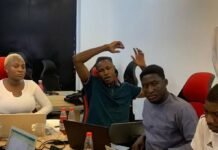
Heels and Tech, a Nigerian edtech focused on helping women and girls gain digital skills, has been selected for Cohort 4 of the Mastercard Foundation EdTech Fellowship. The startup, led by founder Bisola Alabi, will receive up to $100,000 in equity-free funding along with expert support, mentorship, and business guidance. This support will help the company expand its efforts to make technology education more accessible to women and young people.
The news comes at a time when many African families and communities continue to seek better ways for women and girls to acquire the skills necessary for good jobs in the rapidly growing digital economy. Heels and Tech stands as one of twelve Nigerian startups chosen for this latest cohort of the fellowship, which is delivered in partnership with Co-Creation Hub, also known as CcHUB.
The Story of Heels and Tech and Its Founder
Heels and Tech was founded by Bisola Alabi, a Nigerian social entrepreneur and mother who has long worked to expand opportunities for women through education and technology. The company began as a community-driven platform to help women move into tech careers, particularly through practical skills that do not always require traditional coding. It offers cohort-based learning with instructors, covering areas such as no-code tools, data-related skills, product management, and other in-demand digital abilities.
The platform has grown to serve a large community of women across multiple countries. Participants have reported improved career prospects, with many securing roles in well-known organisations both in Nigeria and internationally. The company also connects learners to job opportunities and has explored ways to make training more affordable through financing options.
Beyond adult women, Heels and Tech has worked to inspire younger girls. Through initiatives such as the “Jasmine Discovers Tech” and reading sessions, the organisation has reached thousands of girls in schools across Nigeria and in other African countries. The aim is to reduce fear of technology from an early age and encourage girls to see themselves as future creators and leaders in the digital space. Alabi has also spoken of larger goals, including efforts to bring many more girls into technology fields over time.
Alabi’s own path includes experience in technology consulting and programme management, as well as recent recognition through academic and innovation programmes. Her work reflects a consistent focus on women and girls as central to Africa’s development. The fellowship recognition marks another step in that journey, giving the company resources to invest in its technology, reach more people, and measure the impact of its programmes more carefully while keeping full ownership of the business.
What the Fellowship Offers and Why It Matters
The Mastercard Foundation EdTech Fellowship is a programme created to support early-stage education technology companies across Africa. It provides funding that does not require the company to give away any ownership, along with practical help in improving products, communicating with partners, and building stronger businesses. Selected companies also gain access to networks of experts, potential partners, and opportunities to test their solutions in real settings.
For the Nigerian cohort, the programme runs for about 12 to 18 months and focuses on learning, mentorship, collaboration, and growth. The broader goal is to strengthen Nigeria’s education technology ecosystem so that more learners can benefit from technology that addresses real barriers to quality education and skills training.
Heels and Tech is grouped with other companies working to improve participation, skills development, and economic opportunities for girls and young women. The other selected startups in the cohort address related challenges, including solutions for learners with disabilities, people in underserved or rural communities, and those affected by displacement, as well as tools that improve education data and pathways from learning to work.
This focus is intentional. Many young people in Africa, especially girls and women, still face obstacles that limit their access to relevant education and the chance to earn a good living. Technology, when designed with their needs in mind, can help close those gaps. The fellowship backs founders who understand these realities and are building solutions rooted in the communities they serve.
How the Funding Will Support Growth
The $100,000 equity-free funding is important because it allows Heels and Tech to strengthen its operations without diluting control. Company leaders can use the resources to improve digital platforms, expand training programmes, reach more women and girls in different parts of Nigeria and beyond, and build stronger evidence of what works. The accompanying mentorship and technical assistance will help refine products, improve communication, and develop sustainable business models.
In practical terms, this support can mean better tools for learners who may have limited internet access or competing family responsibilities. It can also mean stronger connections to employers and clearer pathways from training into paid work. For African readers who know the daily challenges of balancing education, family, and economic pressure, such practical improvements matter greatly.
The fellowship arrives when digital skills are increasingly important for jobs across sectors. Many employers look for people who can use modern tools effectively. By focusing on women and girls, Heels and Tech addresses both the gender gap in technology and the wider need for skilled workers who can contribute to national and continental growth.
Why Was Heels and Tech Selected for the Fellowship?
Heels and Tech was selected for the fourth cohort of the Mastercard Foundation EdTech Fellowship because of its focus on improving participation, skills development, and economic opportunities for girls and young women. This is one of the four thematic areas that the fellowship prioritises, alongside solutions for learners with disabilities, underserved communities, and education data systems.
The fellowship programme recognises that gender inequality remains one of the most persistent barriers to equitable education and economic opportunity in Africa. By supporting startups like Heels and Tech, the Mastercard Foundation and CcHUB are investing in solutions that directly address this challenge. Heels and Tech’s work is particularly important because it not only teaches digital skills but also creates pathways for women to access meaningful employment in the technology sector, which is one of the fastest-growing industries in the world.
What Does the Fellowship Mean for Heels and Tech?
Winning the Mastercard Foundation EdTech Fellowship is a game-changer for Heels and Tech. The $100,000 in equity-free funding will allow the company to expand its programmes, reach more women, and develop new tools and resources to support its community. The technical assistance provided through the fellowship will help the company refine its product, improve its communications, and build a stronger business strategy. This support is crucial for any early-stage startup that wants to scale its impact and build a sustainable organisation.
Access to CcHUB’s network of partners is another major benefit of the fellowship. Through this network, Heels and Tech will be able to connect with other organisations, funders, and experts who can help the company grow. The fellowship also provides media readiness and stakeholder engagement support, ensuring that the work Heels and Tech does over the next eighteen months is visible to the partners, funders, and communities that matter most.
Transforming Education Across Africa
The Mastercard Foundation EdTech Fellowship is part of a larger effort to transform education through technology across the African continent. Since its launch, the fellowship has supported seventy-two companies across Africa. These companies have collectively reached more than 700,000 new learners, 89 per cent of whom are children and young people. Of these beneficiaries, 49 per cent are female and 51 per cent are male. This demonstrates the fellowship’s commitment to reaching learners of all backgrounds and ensuring that no one is left behind.
Wariko Waita, the Director of the Centre for Innovative Teaching and Learning at the Mastercard Foundation, captured the spirit of the fellowship when she said, “At its best, EdTech does not just digitise education; it redistributes opportunity”. She explained that the fellowship sits at the intersection of three powerful forces: education system transformation, inclusive technology-enabled solutions, and sustainable edtech entrepreneurship in Africa. This vision is what drives the fellowship and what makes it such an important initiative for the future of the continent.
Nissi Madu, the Managing Partner at CcHUB, also spoke about the importance of the fellowship. She said that the fourth cohort was designed around the belief that the most important decisions about inclusion are made at the earliest stages of innovation. The selected founders are tackling some of the most persistent barriers to equitable education through solutions designed with inclusion at their core. She added that CcHUB’s role is to help these founders test, refine, and generate evidence for their solutions while building sustainable businesses that can scale their impact. Through this support, they are working to ensure no learner is left behind and that these solutions contribute to more inclusive education systems and Africa’s long-term prosperity.