Before Chowdeck’s came onboard, getting a hot meal delivered quickly in Lagos used to be challenging. Major international companies tried to make it work, but many struggled with traffic, poor mapping, and irregular addresses, eventually driving them out of business. However, a local team managed to figure it out by taking on the problems in a different way. The Chowdeck business journey makes provision for a clear look at how a company can scale by understanding local habits and building systems that fit the specific environment they operate in.
Read Also: Africa’s Next Startup Wave: The Powerful Shift Beyond Fintech
It is important to note that the idea for the platform started from a normal human experience. Around New Year’s Day in 2020, Femi Aluko was stuck at home under isolation and found it difficult to get food delivered. Subsequently, while traveling to Dubai, he ordered food and watched it arrive at his door in under twenty minutes. The contrast was stark. He realized that people back home wanted the same convenience, but the existing setup was broken. In late 2021, he teamed up with Olumide Ojo and Lanre Yusuf to see if they could change that scenario.
Early Realities of the Chowdeck Business Journey
At the start, the founders thought they were building a simple software company. However, the early stages of the Chowdeck business journey quickly taught them that delivery is mostly about real-world movement. Standard digital maps often gave inaccurate directions for local streets, so the team shifted focus and began creating custom mapping solutions.
Read Also: How Regulations Are Helping or Harming Tech Ecosystems in Africa
Instead of deploying a massive fleet right away, they started small with just three riders to test the waters. They held weekly meetings with these riders to hear about their challenges on the road. Subsequently, the company started growing steadily with the attention they need to these small details. People noticed that the brown paper bags with the red seal consistently arrived on time, and this reliability became the foundation of the Chowdeck business journey.
Chowdeck Business Journey: From Financial Software to Handling On-Demand Food Delivery in Nigeria
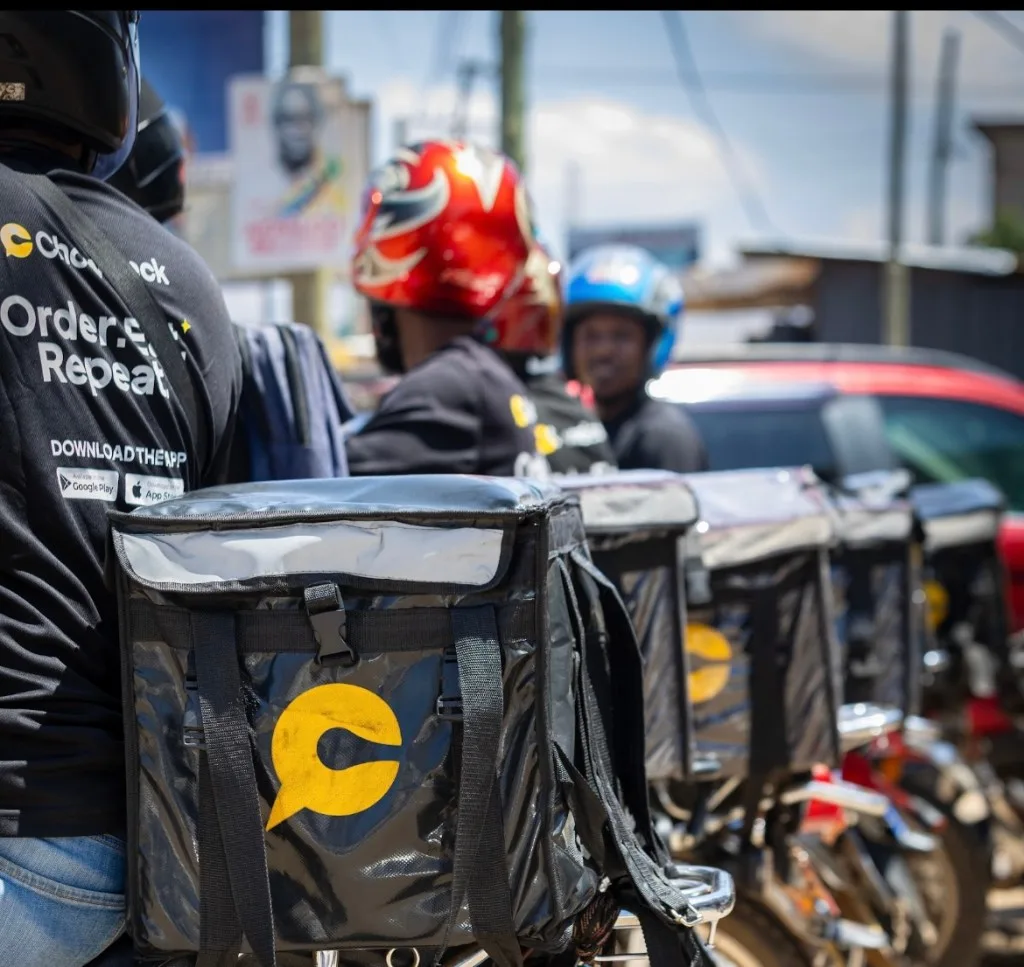
Making the jump from writing code for finance to managing people on motorcycles required a shift in mindset. Fortunately, CEO Femi Aluko brought deep technical experience into the Chowdeck business journey from his time as the principal engineer at Paystack. He had spent years building the backend for digital payments, which taught him how to handle high volumes of data without the system crashing.
Read Also: The Incredible NotchHR Founder Story: How Abiodun Atobatele Built a Fast-Growing HR Startup
When he turned his attention to on-demand food delivery in Nigeria, he treated the logistics network like an engineering system. The team focused heavily on the riders, making sure they were compensated well enough to view the work as a stable career path. Upon prioritizing rider welfare and clear communication, they reduced the high turnover rates that usually hurt delivery businesses. This approach changed how people viewed on-demand food delivery in Nigeria, proving that treating your workforce well is just as important as having a good app.
Chowdeck Business Journey: Securing Capital to Build Stable African Tech Logistics
As Chowdeck business journey continued from handling a few hundred orders to thousands daily, international investors took notice. After an initial period supported by Y Combinator, the company brought in an investment round to expand its reach. By late 2025, they had secured a substantial $9 million Series A funding round led by Novastar Ventures.
This influx of capital was earmarked for a larger shift in African tech logistics. The company started moving beyond restaurant meals and into quick commerce, setting up dedicated fulfilment hubs called dark stores to deliver groceries and daily essentials within minutes. They also bought Mira, a company that makes point-of-sale software for restaurants, allowing them to connect deeper into the food supply chain. This expansion showed that African tech logistics could become about supporting the retail sector from the ground up.
Expanding the Footprint into New Markets
In 2026, the platform has grown significantly, expanding outside Lagos into several other Nigerian cities and entering Ghana. The company announced that it hit a major milestone of processing over one million monthly orders, a goal achieved through a strategy that favored operational depth over rushed growth.
The company’s long-term plan is to build a reliable app that handles multiple everyday needs, from hot meals to household groceries. While still focusing on steady execution, clear tracking, and reliable service, they have turned an everyday frustration into a growing African business.