Technology is changing the way Nigerians manage their fitness, purchase skincare products, book salon appointments, and carryout other wellness routines. Gone are the days when you had to walk into a crowded salon and wait for hours, or rely solely on trial and error for your skincare routine.
As of 2026, Nigeria’s Beauty and Wellness Ecosystem has matured into a vibrant, multi-million-dollar sector. Driven by smartphone adoption, a young population, and the challenges of a tough economy, technology is making beauty and health services more efficient, accessible, and personalised for the average African.
The Digital Booking Revolution: Ending the “African Time” Culture
One of the biggest challenges for the modern Nigerian professional has always been managing time effectively. However, platforms like BookMolly are bringing a change in the form of a complete shift away from conventional methods.
Many Nigerian businesses used to rely on phone calls, Instagram DMs, and WhatsApp to manage appointments—a system often leading to scheduling conflicts and missed appointments. This has drastically reduced the notorious “African time” syndrome, where people show up to appointments late or not at all.
For the business owner, these apps provide data insights that help manage staff schedules and inventory better. For the customer, this means convenience. You can now book a hairstylist or a masseuse with significant ease. This is a remarkable innovation in the beauty and wellness ecosystem.
AI Can Become Your Personal Dermatologist, Carried in Your Pocket
Perhaps the most fascinating leap forward in the beauty and wellness ecosystem in 2026 is the use of Artificial Intelligence (AI) to analyse skin. The Nigerian skincare market has long been flooded with toxic bleaching creams and unfounded advice from influencers. Today, technology is changing that. Oyster, a Nigerian-founded startup, uses AI to turn your smartphone camera into a dermatology scanner. The technology is simple but powerful: you take three selfies, and the app analyzes dozens of parameters—including acne, pigmentation, hydration, and wrinkles.
What makes Oyster special for the African market is its database. Unlike many international apps trained only on Caucasian skin, Oyster’s models were built using the Fitzpatrick skin scale, ensuring accuracy for darker skin tones common in Sub-Saharan Africa.
Founder Jude Chikezie explains that the software can track up to thirty-three different parameters. After analysis, the app creates a personalised skincare routine and recommends products available locally. This has eliminated the dangerous guesswork that many Nigerians relied on, reducing cases of skin damage caused by wrong product combinations.
Tackling Lifestyle Diseases: The Wellness Industry Boom
It is no longer news that one in five Nigerians is overweight, leading to a surge in hypertension, diabetes, and other lifestyle diseases. In response, 2026 has seen the aggressive rise of AI-powered wellness applications designed for the local diet.
WELFAS is a pioneering digital health platform that launched this year to combat this trend. Unlike generic Western fitness apps that recommend kale and quinoa, WELFAS understands the Nigerian kitchen.
The app allows users to scan local meals—such as fufu, eba, and egusi soup—to track calorie intake. It offers personalised meal plans and connects users to doctors and nutritionists. As Brigadier General Innocent Enwuchola noted at the launch, “Innovation is no longer optional in healthcare.” The platform aims to shift the culture from treating sickness to preventing it, a crucial move for a nation with a low health insurance enrollment rate.
The Aesthetics and Medical Spa Revolution
The beauty industry in Nigeria is expanding beyond makeups. In 2026, there is a booming demand for medical aesthetics—laser hair removal, Botox, body sculpting, and chemical peels.
Lagos recently hosted The Aesthetics Show Lagos 2026, the country’s first advanced aesthetic technology symposium. This event marked a turning point. Global technology leaders from the US and Europe flew in to demonstrate live procedures to over 70 Nigerian clinicians.
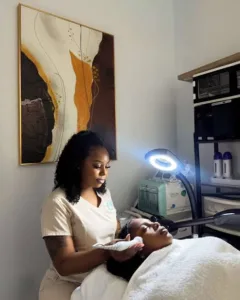
Image source: Shutterstock
Nigerians no longer need to fly to the UK or Turkey for cosmetic procedures. Dr Hamza Arisekola-Alao, CEO of Medizone, said the aesthetics and medical spa market is projected to reach $1.5 billion by 2030.
However, there is a watchful eye on regulation. A major concern raised at the summit was the presence of “unqualified practitioners” performing medical procedures. As the industry grows, there is a strong push for certification and ethical standards to ensure patient safety, protecting Nigerian bodies from the dangers that have harmed others in less regulated markets.
Empowering Local Entrepreneurs
The beauty and wellness ecosystem is not just about big corporations; it is also nurturing homegrown talent. A notable example is Confidence Amamba, a 300-level Industrial Chemistry student at Bells University of Technology. She recently won a N1 million Pitchathon prize for her brand, CONFIA, a science-driven, herb-powered hair care line.
Amamba realised that many hair issues stem from a lack of scientific understanding of natural herbs. By blending over 100 local herbs with chemical research, she created a product line addressing specific hair challenges. Her story is a testament to how Nigerian universities and investors are beginning to fund research-driven beauty solutions from the ground up.
Addressing the Funding Gap: Supporting Women Entrepreneurs
Despite the beauty and wellness ecosystem boom, many small beauty business owners—who are predominantly women—still struggle to access capital and formal training. Recognising this, platforms like Ginger have partnered with FCMB SheVentures to launch programs like “Built to Last.”
This year-long program helps women-led beauty enterprises move from informal “roadside” operations to formal, scalable businesses. It provides training in inventory management, digital tools, and, crucially, access to funding. This is vital because while women drive the beauty economy, they often lack the “systems that recognise their businesses as investable.”
Read Also: Addressing The Alarming Decline in Funding for Women-Led Startups in Africa
The Diaspora Connection: Health Without Borders
Finally, the beauty and wellness ecosystem is bridging the gap between Nigerians at home and those abroad. Startups like FEHT Health are connecting Nigerians in the diaspora with licensed Nigerian doctors via teleconsultation.
A survey by the firm revealed that 84 per cent of Nigerians abroad feel misunderstood in clinical settings because foreign doctors do not understand West African conditions or social nuances. By allowing patients to consult verified Nigerian specialists from London or New York, these platforms are keeping healthcare culturally relevant while earning foreign currency for local doctors.
The state of Nigeria’s Beauty and Wellness Ecosystem in 2026 is one of “Structured Growth. ” The era of chaotic, manual operations is ending.
We are moving into a time where apps calculate the calories in your food, AI checks the health of your skin, and software ensures you don’t show up late or miss appointments. While challenges like regulation, power supply, and data costs remain, the trajectory is clear; Nigeria is positioning itself as a continental hub for beauty and wellness innovation.