Nigeria is working on Fibre-to-the-Home (FTTH) as part of a comprehensive national plan to enhance internet access and digital inclusion through a multi-billion-dollar project called Project Bridge.
This project seeks to install approximately 90,000 km of fibre optic cable nationwide, establishing the most extensive digital fibre backbone investment in any developing country. Project Bridge will be designed as an open-access network delivering fast, reliable broadband connections from urban centres to isolated communities. It is expected to offer universal access to information and communication technology (ICT).
This initiative goes beyond cables and technology. It focuses on deepening inclusion and spreading opportunities. It wants to shape a future where every Nigerian can participate in the global digital economy. The Ministry of Communications, Innovation and Digital Economy is taking the initiative and is collaborating with private sector entities and development finance institutions. It wants to establish a pathway to address the challenges of cost and infrastructure that had previously hindered progress. The project aims to foster competition by allowing smaller internet providers access to core network infrastructure previously controlled by large mobile companies, with the government maintaining a firm minority share.
“Installing FTTH networks requires significant capital but is essential for bridging Nigeria’s digital divide and fostering a more inclusive economy,” stated Kehinde Aluko, a telecom infrastructure specialist. He stresses that Nigeria may fall behind its digital counterparts if it does not quickly expand its fibre infrastructure.
Hurdles and Challenges Limiting Fibre Infrastructure Development
In the course of the journey to expand fibre infrastructure, several hurdles have emerged. Exorbitant fees that certain states charge as Right of Way (RoW) to install fibre cables restrict progress.
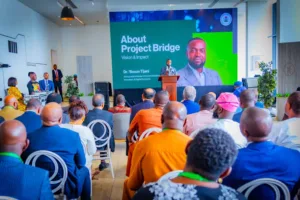
Image credit: Thisdaylive
Nonetheless, the Minister of Communications, Innovation, and Digital Economy, Dr Bosun Tijani, has some good news. He recently revealed that many states have agreed to remove these right-of-way fees. Eliminating cost could substantially hasten the deployment of this infrastructure. This and other forms of regulatory support ensure the project’s viability and economic sustainability.
Dr. Aminu Maida, the Executive Vice Chairman/CEO of the Nigerian Communications Commission (NCC), expressed optimism about Project Bridge.
Furthermore, he opined that the Protection of Critical National Information Infrastructure Order 2024 (CNII) Act will tackle the increasing problem of intentional vandalism of telecom infrastructure.
Check Out Previous Posts on this Site
Nigeria’s Government to Collaborate With Tech Companies to Develop Large-scale Data Centres
NIGCOMSAT Promotes Broadband Initiative for Startups, Defense and Rural Nigeria
Strengthening Protection for Telecoms Infrastructure
A new order signed by President Bola Tinubu acts as an extension of the Cybercrimes (Prohibition, Prevention, etc) Amendment Act 2024, specifically focusing on Parts II & III of the Cybercrimes Amendment Act 2024. The order is designed to boost protection and guarantee the security of telecom infrastructure across the country.
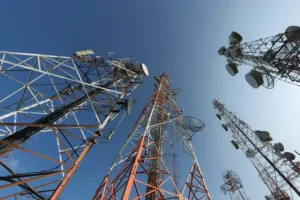
Image credit! Openpr.com
Also, satellite communication specialist Reuben Oshomah stated, “Although fibre is essential, Nigeria should not ignore satellite connectivity as a supplementary option, particularly for isolated and underserved regions where fibre implementation expenses are excessive.” The government’s intention to deploy new telecommunications satellites supports this perspective, guaranteeing more exhaustive coverage in addition to fibre.
The Africa Finance Corporation (AFC), an infrastructure investment firm, cautions that Nigeria must increase its fibre-optic backbone from 35,000 km to more than 125,000 km to achieve broadband goals and address the rising digital demand. The development finance institution emphasised insufficient infrastructure in Nigeria. It described energy and internet network infrastructure as the fundamentals.
Dealing with Challenges from the Community
Community members, such as estate managers, often pose a problem. FTTH operators encounter obstacles from estate association leaders who demand fees or exclusive access deals, making connectivity for residents more challenging. This underscores the intricacies beyond merely installing cables. It is important to highlight that full cooperation, rather than resistance from the community, is crucial for success.
Despite the obstacles, Dr. Tijani stated, “a well-connected Nigeria will promote innovation, back tech startups, and allow businesses to prosper in a swiftly changing digital landscape.” Project BRIDGE transforms our digital economy. Industry participants consider this a critical step toward making Nigeria Africa’s top digital centre.
The fibre optic cables currently extending throughout the country, aimed at linking educational institutions, medical facilities, and residences, are a good omen. It is an indication that Nigeria is moving nearer to its objective for a future where broadband is seen as a right rather than a privilege. Digital access encourages innovation, learning, and economic growth. With initiatives like Project Bridge and others in satellite technology, Nigeria is creating the groundwork for a digitally empowered country to thrive in the 21st century.