Technology is advancing at an astounding speed, and the emerging technology trends in 2026 show the rapid transformation of the digital landscape. With the coming of advanced agentic AI, micro LLMs, automation, robotics, and super apps, we’re entering a year where digital systems are increasingly blending into daily life and work.
In 2026, significant advancements in technology will occur, including generative and agentic AI, hybrid computing, green technology, an expansion of 5G, drones, eVTOL aircraft, IoT, AR/VR, nanotechnology, and biotechnology in agriculture. These advancements will propel automation, enhance decision-making, promote sustainability, and increase connectivity across sectors. Businesses that adopt these technologies early will gain advantages in efficiency, customer experience, and revenue growth. In contrast, professionals skilled in AI, cloud computing, cybersecurity, and data science will experience increased demand in their careers.
In this guide, we’ll analyse the hottest technology trends for 2026, their significance, and their potential effects on the future of humanity. Let’s examine what is coming and how you can prepare for the upcoming surge in technological transformation.
1. Quantum Computing
Quantum computing tackles complex computational problems by applying principles of quantum mechanics, such as superposition and entanglement, to perform computations.

Image source: Finance.yahoo.com
Instead of bits, quantum computing makes use of qubits. Qubits are capable of representing both 1 and 0 simultaneously. They can be intertwined, allowing for rapid problem-solving.
What to expect in this industry in 2026:
- Improved mechanisms for correcting quantum errors.
- Improved quantum algorithms.
- Quantum Computing will emerge as a transformative power for finance, cryptography, and science.
- It will enhance advancements in drug discovery and optimisation.
Market Impact:
- Companies and governments are pouring billions into their research efforts.
2. Disinformation Security
Disinformation security focuses on safeguarding individuals, organisations, and communities against deliberately incorrect or deceptive information. This includes aspects such as misinformation, deepfakes, forged documents, automated networks, and identity theft. These initiatives aim to undermine trust, alter behaviours, or damage reputations.
In contrast to typical cyberattacks targeting computer systems and data, disinformation aims to influence people’s beliefs and confidence. Attackers may impersonate others, disseminate false narratives, or alter images and text to mislead people.

Image source: Varindia.com
What to expect in this industry in 2026
- In 2026, there will be increased utilisation of AI to identify and combat the proliferation of fake news and misinformation on the internet.
- The use of AI as stated above will involve using techniques such as natural language processing, image analysis, and trustworthiness ratings.
- AI for Identifation of deepfakes and verifying sources.
- Automatically flagging misleading content.
- Improving understanding of how misinformation is disseminated.
Market Impact
- It is Crucial for maintaining equitable elections, safeguarding brands, and ensuring national security.
- There will be significant investment in solutions for content authenticity by governments and various platforms.
- Disinformation security will become a developing sector in cybersecurity.
3. Self-Driving Cars & Flying Drones
Self-driving cars, known as autonomous or driverless vehicles, are capable of operating and navigating without human intervention. They rely on sensors, cameras, radar, and AI to perceive their surroundings and determine how to navigate. In summary, the ability to move independently from one location to another.
Aerial drones, also known as unmanned aerial vehicles (UAVs), are aircraft without a pilot on board. They can be operated remotely by a person or can navigate autonomously using a collection of commands, GPS, and sensors.
Autonomous vehicles and drones use computer vision, and AI-driven decision-making to manoeuvre through spaces and execute tasks such as delivery or surveillance.
What to expect in this sector in 2026
- Sensor fusion in real-time (LiDAR, cameras, GPS).
- AI-driven route planning and barrier identification.
- V2X (vehicle-to-everything) communication standards.
- Autonomous drone management systems.
4. Nanotechnology
Nanotechnology involves manipulating materials at an exceptionally small scale, specifically at the atomic and molecular levels. Typically, this involves managing sizes ranging from 1 to 100 nanometers. At this size, materials can exhibit unpredictable behaviour, displaying a range of physical, chemical, and biological properties. This creates opportunities for new applications that aren’t feasible with larger particles.

Image source: Azonano.com
Engineered nanoparticles (such as carbon nanotubes and porous nanocarriers) transport genetic material, fertilisers, or pesticides precisely to plant cells with minimal harm and high accuracy.
What to anticipate in this industry in 2026
- Delivery mediated by carbon nanotubes and nanoparticles.
- Improved gene editing.
- Nano-encapsulation for the controlled release of pesticides or fertilisers.
Market Impact
- Nanotech is providing innovative approaches for precision farming by using safer methods for gene delivery and more efficient agrochemicals.
- Its ability to enhance crop production and sustainability positions it as a crucial factor in the future of agricultural biotechnology.
5. Cloud and Edge Computing
Cloud and edge computing are distinct yet complementary, working effectively together. They enable scalable, distributed data handling and service provisioning. Cloud computing refers to providing computing services, including servers, storage, databases, networks, software, analytics, and intelligence, over the internet (the cloud). Individuals can access these services as needed and generally only pay for their usage, instead of owning and maintaining their own facility.
Edge computing involves processing and analysing data near its source, such as a sensor, device, or local server. In other words, it doesn’t depend on a distant cloud or data centre. The term ‘edge’ indicates that the process occurs at the network’s periphery, close to the source (device), rather than at the centre (data centre).
Cloud computing consolidates processing within vast data centres. In contrast, edge computing shifts data processing nearer to the source of data generation (such as IoT devices or local edge servers) to lessen latency and network congestion.
What to expect from this sector in 2026
- Centralised framework (public/private cloud).
- Edge nodes for immediate and on-site processing.
- Orchestration tools for hybrid and multi-cloud environments.
- Deployment of AI systems that are free of latency.
Market Impact
- Integrating cloud and edge computing is crucial for applications such as IoT, AR/VR, autonomous vehicles, and smart cities.
- The pace of adoption is increasing in tandem with the rollout of 5G and IIoT.
6. Augmented Reality/ Virtual Reality (AR/VR)
Augmented Reality AR) technologies project digital content onto the real world. Virtual Reality (VR) immerse users in virtual environments through the use of wearble virtual reality devices. Both offer immersive experiences, yet they interact with the real world in distinct ways. AR incorporates digital features into your existing view, altering your surroundings. Conversely, VR constructs an entirely virtual environment, isolating the user from the real world.
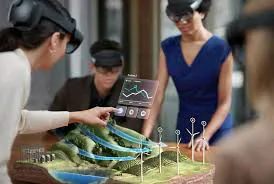
Image source: Microsoft.com
Headsets, smart glasses, or mobile devices use sensors and rendering engines to showcase virtual visuals; AR enhances reality with overlays, whereas VR generates completely immersive virtual environments.
What to expect in 2026
- Devices with wearable displays (e.g. AR spectacles).
- Interfaces for hand and voice interaction.
- Engines for real-time 3D rendering.
- More Content for mixed reality and virtual environments.
Market Impact
- The worldwide AR/VR industry is projected to surpass $100 billion by the end of 2025. AR by itself is estimated to reach USD 198 billion.
- Enterprise AR glasses are experiencing rapid growth, with expected revenues of approximately USD 883 million by 2025.
- Areas of use include cover retail, healthcare, gaming, and education.
7. Drones as a Service (DaaS) and electric Vertical Takeoff and Landing aircraft
Drone-as-a-Service platforms is a business model that allows people or companies to access drone technology and services without the need to purchase or own any drones. Consider it as a subscription service. Users are charged for their specific requirements, including drone operation, data access, and assistance. This eliminates the expenses of buying drones, maintaining them, training operators, and other typical costs.
Drones are being developed to offer urban air transportation, potentially providing a quieter and more environmentally friendly alternative to traditional air travel, particularly in densely populated areas.
Operators use fleets of drones or eVTOL aircraft to offer on-demand aerial services, including inspections, deliveries, and urban air taxi transportation, through subscription or on-demand platforms.
What to expect in 2026
- Dashboards for fleet management.
- Automated scheduling and routing.
- Modules for remote monitoring and compliance.
- More Vertiport facilities and eVTOL approval routes.
Market Impact
- Urban Air Mobility is expected to surge dramatically, with Morgan Stanley predicting an increase from USD 1 trillion in 2040 to USD 9 trillion by 2050.
8. Internet of Things (IoT)
IoT links physical devices—sensors, actuators, machines—to the internet for remote monitoring and control. In simpler terms, it is a framework that uses everyday common items featuring sensors and software, enabling them to link and exchange data with other devices via the internet. These can range from basic household items to intricate machinery in industrial settings.
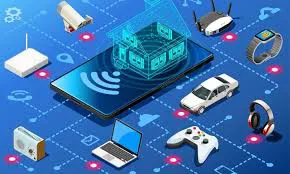
Image source: Britannica
Sensors integrated into devices gather data and transmit it through sophisticated networks. Information is handled in the cloud or on the edge for analysis and automated decision-making.
What to expect in 2026
- More sensor networks and connectivity (Wi-Fi, 5G, Low-Power Wide Area Network)
- Analytics on the edge and in the cloud.
- Automation powered by AI and forecasting algorithms.
- Device oversight, compatibility, and protection framework.
Market Impact
- The worldwide IoT market reached approximately USD 269 billion in 2023 and is expected to surpass USD 300 billion by 2024, with a target of over USD 1 trillion by 2025-2028.
- IIoT spearheads adoption, with precision farming, intelligent urban areas, and factory automation fueling expansion.
9. Biotechnology in Agriculture
Biotechnological instruments transform agriculture via gene modification, pest resistance, and crop enhancement. It uses scientific methods, such as genetic modification, to enhance crops, livestock, and microorganisms for agricultural purposes.
It encompasses techniques such as genetic alteration, tissue culturing, and molecular diagnostics to enhance crop yields, improve food nutrition, and develop resistance to pests and diseases. This sector also includes the creation of biofertilizers and biopesticides as environmentally friendly alternatives to conventional chemicals.
What to expect in 2026
- Methods such as CRISPR gene editing and nano-enabled delivery systems are employed to confer genes for insect/disease resistance, drought resilience, enhanced nutritional value, and targeted fertilisation.
- CRISPR-Cas9 and alternative gene editing for accurate trait insertion.
- Targeting traits (e.g. resistance to insects, tolerance to herbicides, resilience to heat).
- Greater regulatory and biosafety frameworks.
Market Impact
- CRISPR is used to create crops with greater yields, resistance to diseases, and improved nutritional value (such as rice, wheat, soybean, and tomato).
- When paired with nanoscale delivery systems, these tools provide accuracy, sustainability, and a smaller environmental footprint.
Market Impact
- It has the potential to change global agricultural efficiency.
10. Space Exploration and Tourism
The sector began to attract interest after American entrepreneur Dennis Tito became the first individual to travel to space as a tourist on April 28, 2001. Currently, there are increased opportunities for both suborbital and orbital tourism. Reaching space can imply two interpretations: entering orbit, similar to the International Space Station, continuously circling Earth for an extended period, or simply making a brief journey upward and downward, known as suborbital flight.
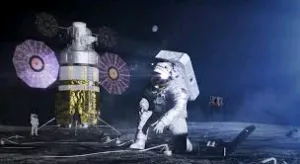
Image source: coe.gatech.edu
Space tourism allows private citizens to participate in suborbital or orbital flights via commercial space travel services. It includes going to space for enjoyment. This can occur on government spacecraft such as the Russian Soyuz and the International Space Station, or on vehicles from private entities.
Commercial rockets or spacecraft offer brief flights, enabling travellers to experience microgravity and view Earth from space. Operations depend on vertically launched vehicles and dedicated life-support systems.
What to expect in 2026
- Protocols for suborbital or orbital flights.
- Recyclable spacecraft/vehicle components.
- Systems for safety and life support are designed for human use.
- Underground facilities for launching and retrieving.
Market Impact
- While remaining niche, space tourism is on the verge of more widespread commercialisation. With decreasing launch costs and clearer regulations, services from companies such as Blue Origin, Virgin Galactic, and SpaceX could facilitate wider involvement, setting the stage for future in-orbit hospitality options.
What to know
The emerging technology trends mentioned above offer only a glimpse of what awaits in 2026 and beyond. These trends will continue to influence how we live and work, having a significant impact on various industries overall. Businesses that adopt these leading technology trends will be strategically positioned to thrive in the fast-changing tech environment.
Businesses must stay current with the latest technology trends and implement new technologies that enable them to remain competitive and satisfy their customers’ needs. With the ongoing advancement of technology, businesses must be prepared to adapt and evolve alongside it to maintain their competitive edge. The path to achievement in 2026 and beyond will rely on creativity and flexibility, as organisations adapt to the ever-evolving tech sector.