

When you purchase through links on our site, we may earn an affiliate commission. This doesn’t affect our editorial independence.
The Nigerian Communications Satellite Limited (NIGCOMSAT) has announced a bold new initiative. It wants to use satellite technology to enhance broadband access throughout Nigeria and bridge the nation’s digital gap.
Jane Egerton-Idehen, the managing director of NIGCOMSAT, revealed the goal at a stakeholder roundtable in Lagos. She emphasised the crucial importance of broadband in energising contemporary economies. She believes that satellite connectivity gives Nigeria the chance to deliver digital services to regions inaccessible by conventional terrestrial infrastructure.
“Broadband is recognised for its higher value and diverse applications, ranging from linking local government offices to enhancing education, defence, healthcare, and financial technology.” “The difficulty lies in the fact that we cannot accomplish it alone,” she stated.
Satellite at the Heart of Nigeria’s Digital Inclusion
In a recent interview, Egerton-Idehen elaborated on NIGCOMSAT’s developmental plans. She stated that making satellite connectivity a fundamental component of Nigeria’s broadband strategy, especially in rural and underserved regions.
She observed that although Nigeria has made advancements, broadband access is still just under 50 per cent for a country with more than 230 million citizens. “Throughout COVID-19, we recognised the critical need to close the digital divide.” Whole communities were isolated from vital services. Satellite connectivity represents one of the feasible solutions to bridge that gap, particularly in rural and remote locations,” she noted.
A key initiative of NIGCOMSAT, Project 774, was developed in collaboration with the Federal Ministry of Communications, Innovation, and Digital Economy. This initiative aims to provide broadband access to all 774 local government secretariats nationwide. To date, 45 secretariats in eight states have been linked. Egerton-Idehen stated that satellite technology in rural areas was essential because installing fibre optic cables is either too costly or challenging to implement.
Surmounting Geographical Challenges Using Satellite Technology
Also, she believes satellite connectivity is essential in remote villages and difficult terrains where installing fibre is not financially feasible or technically complicated. “Imagine a small village composed of only 50 residents.” “Extending fibre from the cities to that village may not be feasible for the private sector or mobile operators. But with satellite connectivity, we can localise the service and deliver that solution for that village,” Egerton-Idehen explained.

She emphasised that satellites offer distinct benefits in intricate terrains and mobile settings. Also, it enhances connectivity for ships, aeroplanes, reconnaissance vehicles, and isolated communities.
Check Out Previous Posts on This Site
Digital Banking Rise in Nigeria as Branchless Future Looms
NearLink: Huawei’s Revolutionary Connectivity Technology, Unveiled
NIGCOMSAT Expanding Services to Agriculture and Healthcare
In addition to local governments, NIGCOMSAT is broadening its services to areas such as agriculture and health. She explained that extensive farms in isolated regions need connectivity to implement Internet of Things (IoT) devices for precision agriculture. In contrast, rural health facilities can use e-health and telemedicine services once dependable access is established.
Nigeria Leading in Africa’s Satellite Sector
Egerton-Idehen emphasised Nigeria’s leading position in Africa’s satellite sector. “Nigeria has shown leadership in the satellite sector,” she noted, remembering that the nation deployed its inaugural communications satellite in 2006 and is still the only West African country with this capability. “We have clarified satellite operations, managing our assets for more than 14 years to deliver broadband, broadcast, and specialised communication services.” What is essential now is employing it to achieve the national broadband penetration goal, especially in rural regions.
Egerton-Idehen emphasised the significance of a multi-faceted strategy for connectivity. To achieve this, it is integrating satellite, fibre, and mobile networks. She pointed out that Nigeria is making significant investments in terrestrial fibre infrastructure. For example, Project Bridge, unveiled by Minister Bosun Tijani, aims to install over 90,000 kilometres of fibre optic cable across Nigeria.
“By combining mobile, fibre, and satellite services, we can accelerate digital access for every Nigerian.” “This will benefit educators, students and merchants in villages and healthcare professionals. People in isolated regions can all access the same degree of digital inclusion as individuals in urban centres,” she stated.
Regarding the investment perspective, Egerton-Idehen emphasised that generating value is essential. It can draw private capital into Nigeria’s satellite sector. She mentioned the worldwide transition in which private companies are now leading innovation and investment in satellite technology, a field previously controlled by governments.
NIGCOMSAT Supporting Startups
In this regard, NIGCOMSAT initiated an accelerator program to assist Nigerian startups in the satellite sector. Last year, the agency collaborated with 25 startups, and this year, it is supporting 35. It is linking them to investors looking for viable satellite-based solutions for underserved communities.
Egerton-Idehen also discussed cybersecurity and data protection, emphasising that regulations must evolve as technology advances. She praised Nigeria’s proactive measures, such as the National Data Protection Act and current initiatives to formulate an AI strategy and a digital economy bill. “Data sovereignty is essential.” “Using our national resources guarantees that sensitive communications, particularly in defence, stay within Nigerian control,” she remarked.
She highlighted the significance of nurturing talent, citing the Federal Government’s 3MTT (3 Million Technical Talent) initiative and NIGCOMSAT’s investments in developing capacity in VSAT and associated technologies. “For technology to succeed, we need to develop not only infrastructure but also the human resources to support it,” she observed.
NIGCOMSAT Supporting Defence
NIGCOMSAT has strengthened its partnership with Nigeria’s defence sector in a connected advancement. Hassan Bala Abubakar, the Chief of Air Staff, has emphasized the military’s focus on using satellite technologies. It is essential for secure communication, real-time intelligence, and surveillance.
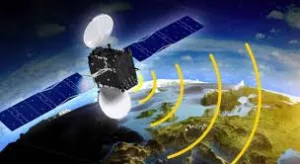
“We are thrilled about collaborating with the Nigerian Air Force and the entire defence sector.” Using national satellite resources, we ensure sovereignty, security, and sustainability in essential communications. “This guarantees that Nigeria is employing its infrastructure to address its security issues,” stated Egerton-Idehen. She noted that NIGCOMSAT also supplies satellite communications to naval vessels, such as NNS Kano.
She restated that Nigeria’s investments in satellite technology now benefits various sectors, including government administration, defence, healthcare, and agriculture. “This is merely the start,” she remarked. “Through collaborations and multi-level connectivity solutions, Nigeria can advance into a future characterised by inclusive, secure, and sustainable digital access.”