
When you purchase through links on our site, we may earn an affiliate commission. This doesn’t affect our editorial independence.
Level, the company that revolutionised smart home technology has a new offer, the Level Lock Pro. This smart lock transforms smart homd security, and aesthetics. Level Lock Pro offers improved performance and security with features like door-status detection to indicate when a door is left open. Also, it has the widely acclaimed stealth design that Level is known for. There has never been a smart lock that incorporates so much technology in such a small frame. With Level Lock Pro, homeowners can enjoy both style and ease.
Level Lock Pro is built with a completely new hardware platform, providing ultra-fast responsiveness and extended battery life. Innovative, built-in sensors detect whether the door is open or shut.
Thanks to its built-in Matter technology, Level Lock Pro delivers enhanced connectivity and compatibility with top smart home ecosystems, such as Apple Home, Amazon Alexa, Google Home, and Samsung SmartThings. Homeowners can access their lock from anywhere, set up routines, and connect their smart home.
Level Lock Pro offers all the features that customers expect from Level: auto-lock, activity logs, guest sharing. Also, it has a reliable Bluetooth functionality, ensuring homeowners won’t be locked out during internet or power outages. Homeowners have various options for entering their homes, such as using a key, the Level Home app, Apple Home Key, or fobs.
“We designed Level Lock Pro to be more intelligent, quicker, and more effective—while remaining undetectable,” stated John Martin, President and Head of Level. “It represents the pinnacle of our lineup and captures our essence of design and engineering.”
Main Features of Level Pro:
- Unparalleled performance and efficiency – Advanced hardware platform for enhanced responsiveness while prolonging battery duration.
- Integrated door status detection – Identifies open and closed positions without visible sensors or magnets.
- Matter integrated – Compatible with Apple Home, Google Home, Amazon Alexa, and Samsung SmartThings for remote control and automation.
- High-quality design elements – Key cylinder, bolt plate, and strike plate that match the finish for a more cohesive appearance.
- Tap-to-unlock – Use Apple Home Keys or NFC key fobs for quick, secure access.
- Concealment – All the technology is integrated within the lock, maintaining stealth and preserving the elegance of your door.
- Top-tier security – Awarded AAA certification by BHMA, signifying the utmost industry benchmarks for security, durability, and finish.
- The Level Lock Pro is now available in Matte Black and Satin at level.co, with more retailers and Apple stores to come.
Level provides a variety of products to satisfy every requirement—all of which reflect Level’s philosophy of unobtrusive technology and uncompromising design.
Things to Know When Setting up A Security Camera
Once you’ve determined if you require an indoor camera, an outdoor camera, or both, the next step is to evaluate the features. These are the 10 key factors to consider when selecting a security camera.
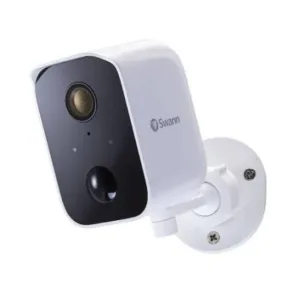
Image source: Swann Security
1. Resolution
Seek cameras that offer high resolution for sharp, detailed images. We recommend avoiding camera purchases unless the resolution is at least 720p, 1080p, or 4K.
2. Field of View
We recommend purchasing a security camera with a wide-angle lens, as they offer a broader field of view. Positioning is a crucial aspect in setting up a security camera. It should be high enough to be out of reach, yet low enough to capture faces. Cameras that were positioned too high often miss capturing essential details, such as faces.
3. Night Vision
When selecting a security camera for outdoor use, it’s wise to choose one with night vision for clear images in low light.
4. Motion Detection
Motion sensor cameras can notify you when movement is detected and conserve storage by capturing only pertinent footage.
5. Audio Capabilities
Two-way audio enables communication via a camera, allowing you to talk to guests remotely via your camera.
6. Storage
You must determine if you prefer local storage (SD cards or DVR) or cloud storage for saved recordings. Cloud storage lets you store more data, whereas SD cards are better for offline or local use.
7. Connectivity
Cameras with Wi-Fi or Ethernet connectivity enable remote access and management via mobile applications and web platforms.
8. Waterproofing
When purchasing an outdoor camera, it’s important to select one that is suitable for your climate. We suggest purchasing a camera with an IP65 or IP6 weather rating.
9. Smart Features
Innovative features such as facial recognition, compatibility with other smart home systems, and customizable notification areas. I set this up at our residence to alert us when an uninvited individual is outside in an area not accessible to the public.
10. Reputation of the Brand and Customer Support
Purchase a security camera from a trustworthy brandrecognisedd for dependable products and excellent customer service.
The appropriate camera can change everything. Cameras that pack all the essential features, from sharp resolution to motion detection serve as a vigilant observer. They have been a lifesaver to many people in emergency situations. Take a moment to evaluate your environment, reflect on the aspects that are most important to you, and choose an option that ensures your safety. Read this article to find out more about the need for modern home security systems and how older systems fail.
Things to Know When Setting Up a Smart Home
A smart home uses internet-connected devices to remotely control lighting, temperature, security, and entertainment, enhancing comfort, efficiency, and convenience. However, establishing such a system can be complex and requires careful planning.
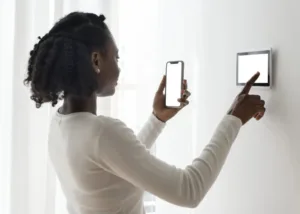
Image source: Freepik
Key steps in setting up a smart home include prioritizing specific needs—whether security, automation, or entertainment—and ensuring a robust, high-speed internet connection with a quality router to support multiple devices.
Successful implementation also involves selecting a compatible central hub, like those from Google, Amazon, or Apple, to unify control. Essential components often include smart lighting, security cameras, door locks, and thermostats, which can be managed via smartphone apps or voice assistants. Throughout the process, maintaining strong cybersecurity with strong passwords, two-factor authentication, and regular updates is crucial to protect privacy.