When you purchase through links on our site, we may earn an affiliate commission. This doesn’t affect our editorial independence.
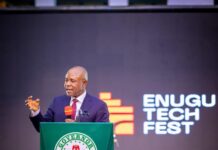
A couple of years ago, Governor Babajide Sanwo-Olu first pitched the dream of GITEX Nigeria. He wanted Lagos to host Africa’s biggest startup showcase, GITEX Africa. This week, that vision finally came to life at Eko Hotel. Smiling, Sanwo-Olu walked through the halls filled with buzzing founders. On stage, he declared Lagos as Africa’s launchpad for tomorrow.
In reaction, the crowd echoed his words with excitement and approval. Moving forward, they called Lagos home to unicorns, startups, and endless ambition. This development further affirms that Nigerian founders carry a standard badge of resilience. That word had a heavy weight across speeches and panels, explaining survival in tough times but also becoming a source of pride.
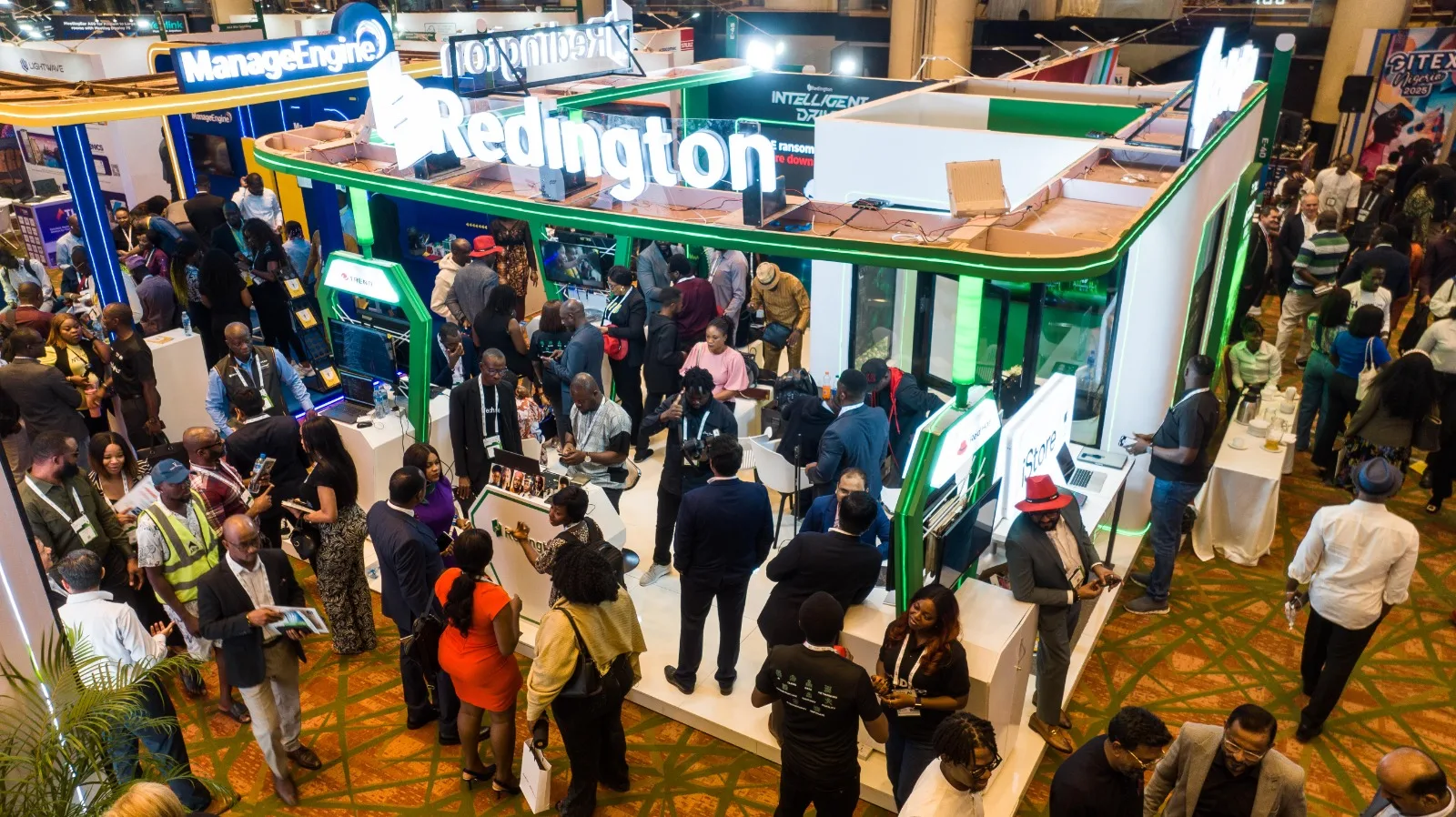
Over two days, the city pulsed with tech energy. Furthermore, GITEX Nigeria Tech Expo and Future Economy Conference were held at Eko Hotel in Lagos. Simultaneously, the GITEX Nigeria Startup Festival filled the Landmark Centre with founders. Additionally, both events showed Lagos as a true hub of innovation.
Furthermore, Trixie LohMirmand, CEO of KAOUN International, praised the Lagos ecosystem, calling it a “mega high-speed testbed” for daring entrepreneurs. According to her, Lagos startups succeed through necessity-driven innovation, not conventional methods.
In addition, Kashifu Inuwa, Director-General of NITDA, added a striking point while delivering his address: In developed countries, infrastructure drives innovation. Similarly, in Nigeria, survival and resilience push founders to create solutions. He noted that “we have no options.” “We must build our future with talent.”
GITEX Nigeria: Lagos Resilience Meets Capital Demands
Despite the pride, frustration exists within the ecosystem. Additionally, founders are tired of surviving without proper capital backing. During the GITEX Lagos panels, Olu Olufemi-White of Alami Capital spoke out. Additionally, she insisted Nigeria needs a federal innovation fund of global standards.
She further directed her appeal to NITDA and the government specifically. “Support us with intentional capital, not just empty speeches,” she said. She particularly noted that when the government invests, private investors follow with confidence.
It is noteworthy that Nigerian startups raised $410 million in foreign funds in 2024. Fintech giant Moniepoint alone attracted $110 million to hit unicorn status. Lagos, however, still needs stronger local capital support. In other words, resilience alone is not enough. The government has to support startups financially to strengthen the ecosystem.
Iyinoluwa Aboyeji of Future Africa described startup investment as both a nation-building endeavour and a profitable business. “The government will make money,” he stressed. “They only need to invest in talent and startups.”
Government Action and the Future of Talent
At the GITEX Lagos event, Aboyeji also highlighted human capital as an overlooked area. He pointed to the Three Million Technical Talent (3MTT) program. However, he warned that Nigeria cannot produce just 4,000 STEM graduates yearly. China, he said, produces 3.8 million in comparison.
Olufemi-White supported his call, stressing talent needs capital to grow. Many unicorns have already proven that Nigerian talent is world-class. Yet, without government support, talent risks being underutilised.
Inuwa of NITDA disagreed with the claims of government inaction. He cited the Nigeria Startup Act and the CBN’s cashless policy. According to him, fintech success in Lagos grew from such interventions. Still, he admitted the government must reinvent its contract with tech players.
Recent moves show some progress. Additionally, in March 2025, Nigeria and Japan pledged a $40 million fund. Moving forward, it aims to back early-stage startups across the country. The Startup Act itself includes ₦10 billion yearly seed funding provisions.
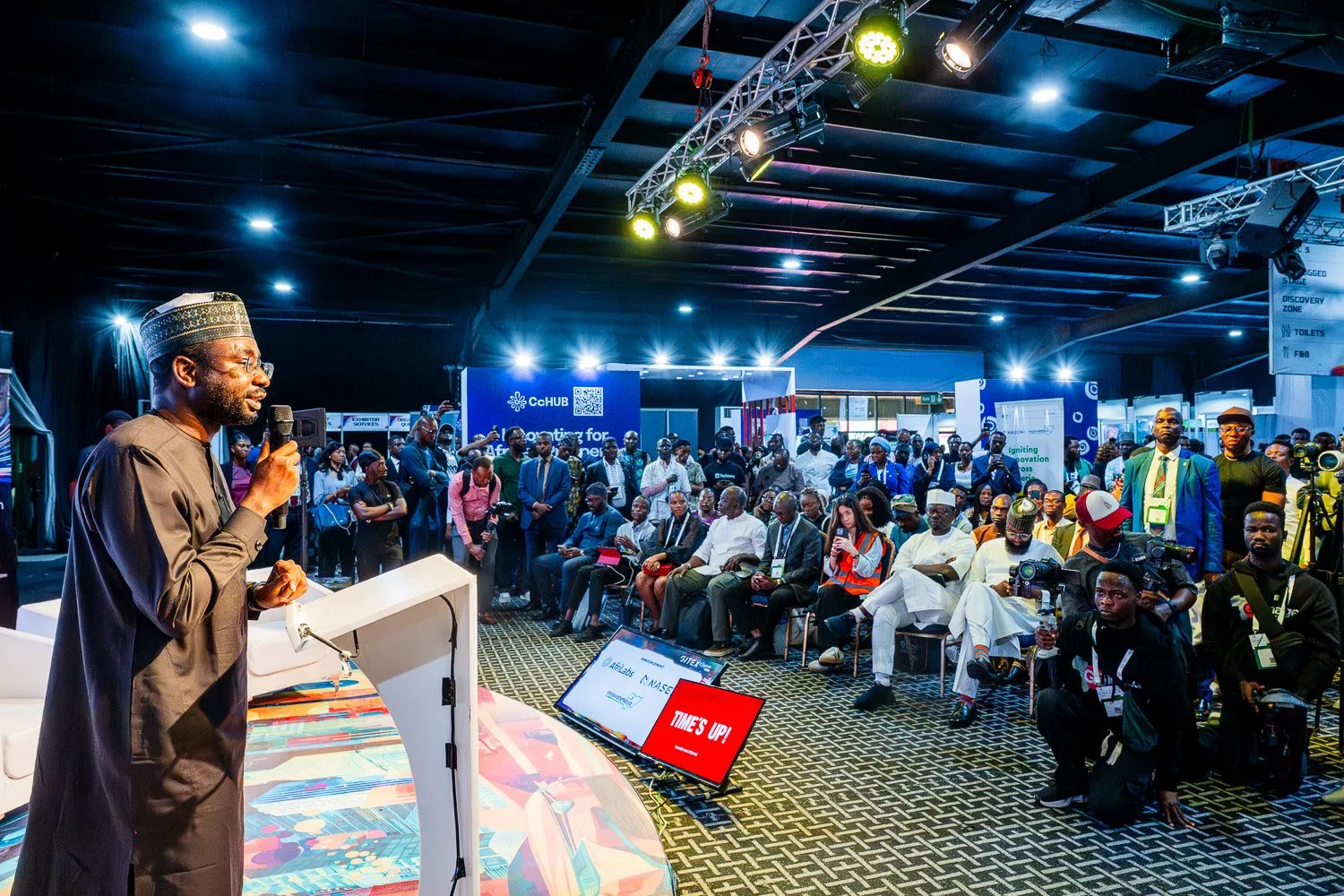
However, Lagos is not waiting for federal efforts to take root. Governor Sanwo-Olu announced plans at the GITEX Lagos event for a new state-led innovation fund. Moreover, it will take 1.5% of Lagos’ capital budget to support startups. This new approach aims to replace fragmented funds like LASRIC.
Why GITEX Lagos Matters
The LASRIC fund disbursed $330,000 to 40 startups by 2024. But with more than 600 startups in Lagos, the gap is wide. Last year, Lagos startups attracted $252 million in investment. Still, the figures remain below their potential with stronger government support.
Governor Sanwo-Olu emphasised the state’s readiness to act. “We are creating that future here in Lagos,” he said. He called for digital, inclusive, and data-driven governance in the 21st century.
The GITEX Lagos platform is designed as a bridge. It connects local startups with global investors and stakeholders. But it also gives founders a chance to demand accountability. For many, the message is clear: the government must put money behind its promises.
For Nigeria’s tech scene, GITEX Lagos was a mirror of potential and possibilities. Lagos is building the stage, but only deliberate investment can sustain growth. The world is watching to see if government and private actors will deliver.