When you purchase through links on our site, we may earn an affiliate commission. This doesn’t affect our editorial independence.
The creators of Dark Sky have returned with a new weather platform built outside Apple. They claim their new product improves forecast accuracy and transparency. The team introduced the Acme Weather app as a consumer-focused tool with advanced forecasting logic and user-driven reporting.
After selling Dark Sky to Apple in 2020, the founders spent years working on Apple’s WeatherKit platform. They now want more flexibility to test ideas and ship features quickly. That motivation shaped the launch of the Acme Weather app.
Read Also: Apple CarPlay AI Chatbots Deliver Powerful In-Car Experiences
The product enters a crowded market dominated by Apple Weather, AccuWeather, and The Weather Channel. However, its creators argue that modern weather apps oversimplify forecasts. They believe users deserve to see uncertainty rather than a single prediction. The Acme Weather app tries to make that uncertainty visible and practical.
Adam Grossman, a Dark Sky co-founder, says weather remains one of the hardest systems to predict. Forecast models can diverge widely even within short time windows. Many apps hide this variability and present only one outcome. Grossman argues this approach misleads users and limits planning.
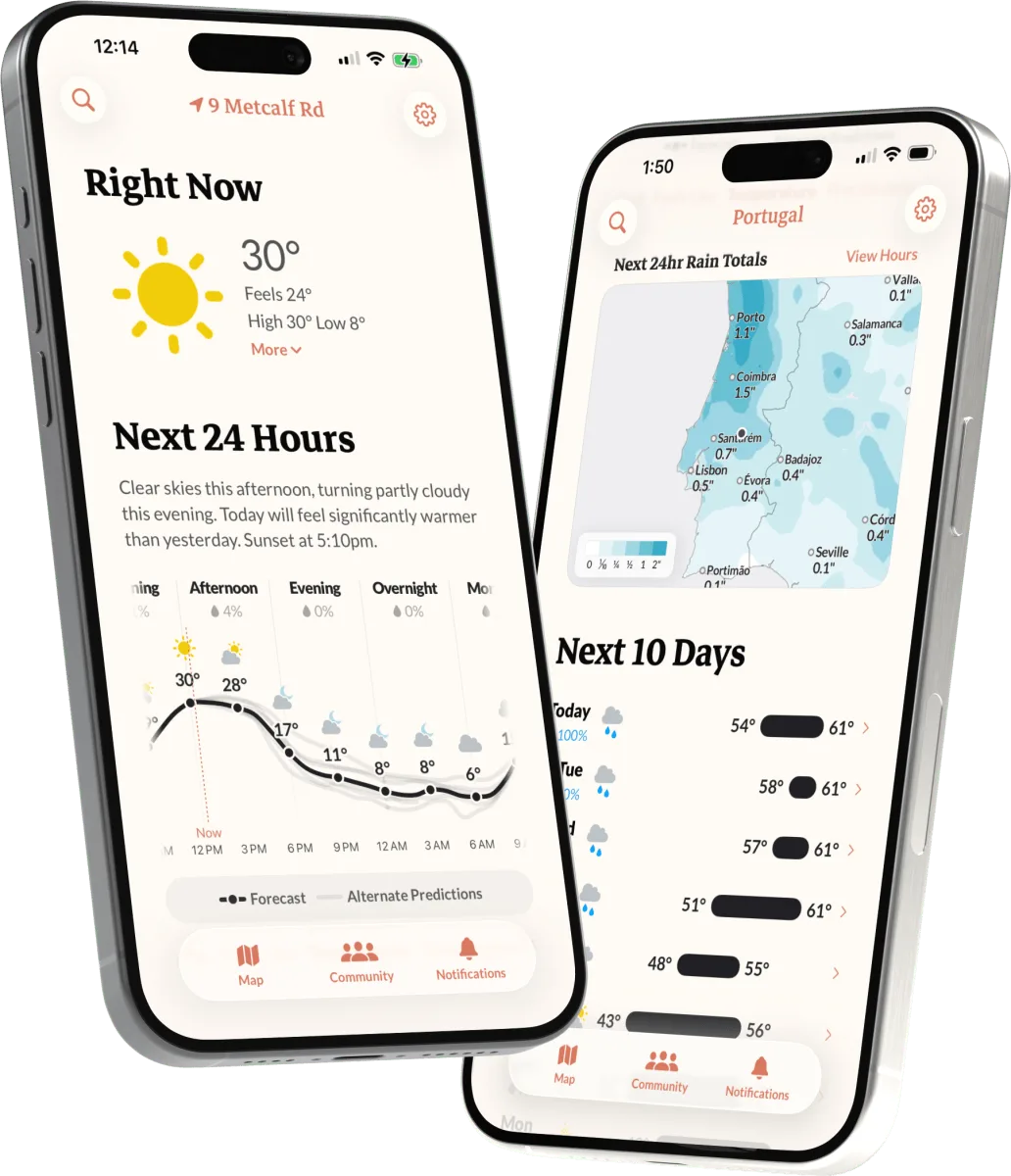
The new platform shows multiple forecast possibilities using visual graph overlays. Users can see how different models disagree on rain, snow, or storm timing. This design choice distinguishes the Acme Weather app from mainstream competitors. It also aligns with broader trends in probabilistic forecasting and risk communication.
Why Probabilistic Forecasts Matter for Users and Developers
Weather affects transportation, agriculture, energy markets, and emergency planning. Even small forecast errors can trigger significant economic losses. Probabilistic forecasts help decision-makers weigh risks rather than relying on binary predictions. The Acme Weather app pushes this approach into consumer software.
Read Also: Apple Siri AI Chatbot: Apple Plans Major Siri Overhaul
The app integrates numerical weather models, satellite imagery, radar data, and ground station observations. These sources feed its in-house forecasting pipeline. This architecture reduces dependence on third-party data providers and mapping platforms. It also gives the team full control over visualizations and data updates.
Developers may find this approach relevant. Dark Sky previously offered an API for developers, which Apple replaced with WeatherKit subscriptions. The new team has not confirmed plans for a developer API. However, Grossman acknowledges developer demand for transparent and customizable weather data.
The Acme Weather app currently targets consumers through a subscription model. Users pay $25 per year after a two-week trial. This pricing reflects the cost of ingesting multiple weather models and maintaining data infrastructure. Subscription-based weather services are becoming common as data costs rise.
Beyond forecasts, the app provides detailed weather maps. Users can explore radar, lightning, snowfall, rainfall totals, wind, temperature, humidity, and cloud cover. Hurricane tracking features also appear in the interface. These tools position the Acme Weather app as both a forecasting and visualization platform.
Community Reports allow users to submit real-time local observations. This crowdsourced layer complements official sensors and satellite data. Community-driven weather reporting has proven valuable during severe events. It also increases user engagement and data granularity.
The founders aim to replicate Dark Sky’s real-time precipitation tracking but with expanded functionality. Dark Sky gained popularity for hyperlocal rain predictions and minute-by-minute alerts. The Acme Weather app builds on that legacy while adding experimental alerts and personalization features.
Notifications, Customization, and Indie Product Philosophy
Notifications remain a core feature. Users receive alerts for rain, lightning, severe weather warnings, and community updates. The platform also experiments with nontraditional alerts such as rainbow forecasts and sunset predictions. These features live in a dedicated “Acme Labs” section.
The team plans to keep these experimental alerts conservative to avoid false positives. Predicting optical phenomena like rainbows requires precise sun angle and precipitation estimates. Sunset alerts depend on cloud cover and atmospheric conditions. These features reflect the team’s interest in blending science with everyday curiosity.
Customization is central to the Acme Weather app experience. Users can prioritize specific metrics such as wind speed, UV index, or precipitation probability. They can also focus on short-term forecasts within the next 24 hours. Personalization differentiates modern weather apps in a competitive terrain.
Read Also: Apple and Google Updates Expose Hacking Campaign
Grossman highlights the benefits of operating as an independent startup again. Large companies move slowly due to scale, risk management, and stakeholder oversight. Small teams can test unconventional features and iterate quickly. This mindset drove the decision to build the Acme Weather app outside Apple’s ecosystem constraints.
The product currently runs on iOS, with Android planned later. Cross-platform expansion will be critical for broader adoption. Android users represent a large share of global smartphone owners, especially in emerging markets. Delayed Android availability could limit early growth for the Acme Weather app.
The team includes former Dark Sky co-founders Josh Reyes and Dan Abrutyn, plus new hires. They operate as a bootstrapped startup without external funding. Bootstrapping may constrain scale but offers product and strategic independence. This approach aligns with the founders’ emphasis on experimentation.
From a market perspective, the Acme Weather app competes in a sector shaped by platform bundling and data subscriptions. Apple Weather benefits from deep iOS integration, while Google Weather leverages Android distribution. Independent weather apps must differentiate through data quality, transparency, and niche features.
The team’s focus on alternate forecast scenarios reflects broader industry debates. Meteorologists increasingly advocate communicating uncertainty instead of deterministic predictions. Research shows users make better decisions when they understand forecast ranges. The Acme Weather app operationalizes this philosophy for everyday users.
Pricing and positioning will influence adoption. At $25 per year, the app targets users willing to pay for premium weather insights. Free apps dominate the market, but many rely on ads and limited data sources. Subscription pricing may attract professionals, outdoor enthusiasts, and weather-sensitive industries.
Future expansion could include APIs, enterprise data products, or partnerships with logistics and energy firms. However, the team has not confirmed these plans. For now, the Acme Weather app focuses on consumer experience and feature validation.
Moving forward, the Acme Weather app represents a return to independent weather innovation by Dark Sky’s original creators. It emphasizes probabilistic forecasting, user customization, experimental alerts, and transparent data visualization. Its success will depend on platform reach, forecast accuracy, and user trust.