Aeon, a Nigerian cybersecurity startup, has extended its pre-seed funding round from $1 million to $2 million, doubling its earliest backing as it races to build sovereign cyber defence infrastructure for Africa and the Global South.
The extension brings in two new investors: Launch Africa Ventures and Octerra Capital. They join Terra Industries, the Nigerian defence-tech company that led Aeon’s initial $1 million round in September 2026, and Resilience17, the venture fund founded by Flutterwave co-founder and CEO Olugbenga Agboola, alongside other backers such as Kaleo, DFS Labs, Ajim Capital, and Seedstars. The fresh $1 million will fund expansion of Aeon’s engineering and specialised cybersecurity teams, strengthen local technical expertise, and accelerate product development as the company moves its existing pilots toward commercial deployments.
The Problem Aeon Is Trying to Solve
Africa’s digital economy is growing fast, but so are the threats against it. Banks, telecommunications companies, energy providers, healthcare organisations, and government agencies are all increasingly dependent on digital systems, yet many still rely on fragmented cybersecurity tools that are costly to operate and difficult to integrate. At the same time, artificial intelligence is changing the economics of cybercrime. Capabilities that once required great technical skill are now accessible to a much wider pool of attackers, allowing them to automate attacks, craft convincing social engineering campaigns, and target organisations at greater scale.
The numbers tell a stark story. According to INTERPOL’s African Cyberthreat Assessment 2026, artificial intelligence is now enabling approximately 55 per cent of reported cybercrimes across the continent. Reported financial losses from cybercrime have more than doubled since 2024, rising from $192 million to $484 million. For African businesses and institutions, especially those running critical infrastructure, the message is clear: security built elsewhere, for different systems and different regulators, is no longer enough.
Two Products, One Goal: Digital Sovereignty
Aeon is building an integrated cyber defence ecosystem around two core products. The first is Aeon Console, an AI-powered cybersecurity and compliance platform that helps organisations identify, prioritise, and fix vulnerabilities across their applications, cloud infrastructure, and endpoints. The second is Aeon Edge, a network security device that sits inside an organisation’s network and gives security teams visibility and control over connected devices, network activity, and potential threats.
Together, the two products are designed to connect the discovery of weaknesses with the actions needed to close them. But Aeon’s ambition goes beyond selling software. The company’s approach to sovereignty is about more than where data is stored. It is about giving African organisations and governments the ability to understand, manage, secure, and respond to threats across the systems that power their economies. As Ashim Egunjobi, Managing Partner at Octerra Capital, put it, Aeon’s approach to integrating fragmented security operations is particularly compelling, and for Octerra it represents a natural extension of its conviction in the trust layer of the digital economy.
The Team Behind the Mission
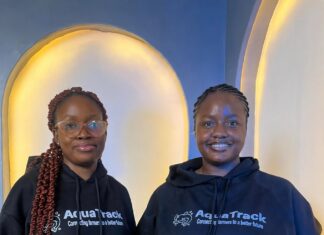
Aeon was founded in February 2026 by Samuel Ogbonyomi, Ben Eluan, and Alex Idowu, who began building the company through PipeOps, a cloud infrastructure management platform. Their experience running cloud infrastructure for African businesses gave them a direct view of the security gaps that organisations across the region were struggling with. That practical insight shaped the products Aeon is now bringing to market.
“AI is fundamentally changing the threat landscape,” Ogbonyomi said in a statement. “The technical barriers that previously limited sophisticated cyberattacks are falling, and the speed and scale of these threats are increasing. Our response cannot simply be to adopt more tools. We need to build the infrastructure, technical expertise, and capabilities to defend the systems our economies depend on. We believe Africa should be actively building that future”.
Why Investors Are Backing Aeon
For Launch Africa Ventures, the investment follows a two-year search for a team building cyber defence for Africa’s critical infrastructure from the ground up. Uwem Uwemakpan, Head of Investments at Launch Africa Ventures, explained that Aeon’s founders had spent years managing cloud infrastructure for African businesses at PipeOps and built their product around the gaps they saw. “As AI makes attacks cheaper to launch and harder to detect, banks, grid operators, and telecoms across the continent need security built for their own systems and regulators. That is what Aeon is building,” he said.
The involvement of Terra Industries goes beyond a simple cheque. The initial $1 million round established a commercial relationship between the two companies, and they plan to develop a joint venture to pursue corporate and government contracts together, combining physical security with cybersecurity. That kind of strategic alignment matters in a market where trust and local presence are often as important as technology.
What the New Capital Will Do
The additional $1 million will not be spread thinly. Aeon plans to concentrate it on the areas that matter most at this stage: growing the engineering team, deepening cybersecurity expertise within Nigeria, and moving its pilots into full commercial deployments. The company is targeting organisations in financial services, energy, healthcare, telecommunications, government, and defence, sectors where a security incident does not just hurt one business but can disrupt entire economies and communities that depend on those services.
The timing is significant. Regulatory attention on cyber resilience is rising across Africa. In Nigeria, for example, the telecoms regulator has ordered mobile operators to carve out dedicated budgets for cybersecurity. That creates both pressure and opportunity for local security providers that understand the operating environment, the regulatory landscape, and the realities of African infrastructure.