
Most smartphone companies operate on throwaway culture. Buy the latest model, use it for two years, then toss it when the battery dies. Dutch company Fairphone thinks this approach is completely backwards. Their sixth-generation device proves sustainable phones don’t have to suck anymore. That’s why we put together this fairphone 6 review.
This isn’t about tree-hugging guilt trips either. The Fairphone 6 actually works well enough that regular people might consider buying it. That’s progress.
Design & Build of Fairphone 6
Earlier Fairphones looked like they were assembled in someone’s garage. Thick bezels, chunky bodies, cheap plastic everywhere. The Fairphone 6 changes that narrative completely.
The 6.6-inch AMOLED screen looks sharp enough to compete with mainstream brands. Slimmer bezels give it a modern appearance. Gorilla Glass Victus protects the front from typical pocket damage. Side by side with a Galaxy or iPhone? You won’t feel embarrassed pulling this out in public.
But here’s where things get interesting. Pop off the back cover with your fingernail—no heating, no special tools. Inside, everything connects with screws and clips instead of glue and prayer. Broken screen? Replace it yourself for €80. Dead battery after three years? Swap in a fresh one for €35. USB port getting loose? Five minute fix.
 Performance Review of Fairphone 6
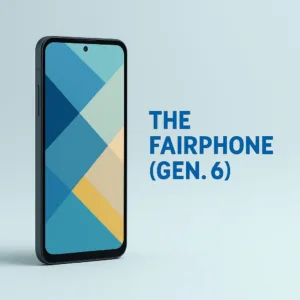 Performance Review of Fairphone 6
The Snapdragon 7 Gen 2 processor handles daily tasks without major complaints. Social media scrolling stays smooth. Video streaming works fine. Even moderate gaming runs acceptably on medium settings.
Will it match a flagship Samsung or iPhone in benchmark tests? Obviously not. But benchmarks don’t matter for 90% of smartphone usage.
The 8GB of RAM keeps multiple apps running simultaneously without constant reloading. Internal storage starts at 256GB with microSD expansion available. That’s plenty for most users’ photos, apps, and music collections.
Gaming performance hits limitations with demanding titles. Genshin Impact struggles on higher settings. PUBG Mobile requires medium graphics for consistent frame rates. Serious mobile gamers should look elsewhere.
Fairphone 6 Display & Audio
AMOLED displays used to be expensive luxuries. Now they’re showing up in mid-range devices, including this one. The 6.6-inch panel produces vibrant colors and deep blacks. The 120Hz refresh rate makes everything feel fluid.
Outdoor visibility works better than expected. Bright summer days don’t render the screen completely useless like some budget phones. Color accuracy seems decent for photos and videos, though professionals would want calibrated displays.
The stereo speakers actually produce stereo sound instead of fake marketing claims. Volume gets loud enough for video calls or casual music. Bass response lacks depth compared to premium phones, but clarity stays good at normal volumes.
No headphone jack though. That’s disappointing for a company promoting sustainability and repairability. Dongles get lost, break easily, and create electronic waste. Seems inconsistent with their mission.
Camera Review
Photography represents the biggest compromise area. The dual 50MP rear cameras capture decent shots in good lighting conditions. Colors look natural without heavy processing. Detail levels satisfy social media sharing requirements.
Low light photography reveals limitations immediately. Noise increases significantly after sunset. Night mode helps somewhat but can’t match computational photography from Google or Apple. Indoor restaurant photos often look grainy.
The 32MP front camera handles video calls and selfies competently. Nothing spectacular, but functional for typical use cases.
What’s clever is the modular camera design. Fairphone promises upgrade modules for future releases. Instead of buying a completely new phone for better cameras, users could theoretically swap in improved sensors. Whether this actually happens remains to be seen.
Battery Life & Charging
Remember when phone batteries were removable? The Fairphone 6 brings that concept back. Pop off the back cover, lift out the 4,800mAh battery, snap in a replacement. Takes about thirty seconds.
This solves the biggest longevity problem with modern smartphones. Lithium batteries degrade over time, losing capacity and requiring more frequent charging. Normally this means expensive repairs or new phone purchases. Here it means a €35 battery replacement that anyone can do.
Daily battery life lasts comfortably through normal usage. Heavy users might need afternoon top-ups, but that’s typical for any smartphone with intensive usage patterns.
Charging speeds cap out at 30W. That’s slower than many current flagships offering 65W or higher. A full charge takes about 90 minutes instead of 45 minutes. The replaceable battery makes this less critical since degraded batteries aren’t permanent problems.
Final Verdict: Sustainable Progress
The Fairphone 6 proves ethical smartphones can be genuinely usable products. Previous generations felt like compromise purchases requiring significant sacrifices. This model bridges the gap between principles and practicality.
Rating of Fairphone 6: 4.0/5
Based on this fairphone 6 review, Sustainability and repairability justify the price premium for environmentally conscious consumers. Performance limitations prevent universal appeal, but adequate functionality meets most users’ actual needs rather than benchmark fantasies.
Fairphone continues improving their products while maintaining core values. The sixth generation represents their best balance yet between ethics and everyday usability.